www.newstower.ng

Meet Paul Jeremiah, a multi-talented IITA-trained farmer making the difference 


By Ayo Oyoze Baje


As millions of Nigerians groan under the current economic hardship, foisted on us by the sudden, rash removal of fuel subsidy back in May 2023 with the spin – off effects of high inflation rate, spiralling into the escalating costs of transportation, food items, sundry consumables and services, there are a few young entrepreneurs defying the odds to succeed as problem – solvers. We need to glean a lesson or two from them.


One of such is the 29 year-old Paul Godswill Jeremiah.In a recent encounter he revealed some facts about his professional background, what he currently does and his vision for the future. As the wise ones say, it is always good to hear from the horse’s mouth. He has therefore, responded to related questions. The taste of the pudding is really savoured in its eating. So, enjoy the conversation, in his own words:


On his background he stated that: “I’m from Akwa Ibom, but based in Lagos. I’m a student running a part – time programme at the University of Lagos, Distance Learning Institute (DLI).currently at the 300-Level studying Public Administration. My professions include photography, solar power gadgets installation, poultry farming as well as a marketer.


With specific regards to poultry farming he stated that: “My experience at the training was that I learnt to be a problem – solver as an entrepreneur, based on what to produce, how to produce it and who to produce them for.


“I learnt on how to become a successful poultry farmer, how to take care of the birds such as broilers, layers and cockerels. I also learnt of how the pen – house must be kept clean, which is going to be a daily routine. In the course of this training the platform became an eye- opener of what I did not know. But now I know and I understand what it takes to be an agribusiness poultry farmer. “


Furthermore , he shed more light of what he gained during the period of his IITA training program. Said he: “In the course of the training we were asked to write down our weaknesses and our fears, so as to face them, of which I did. I penned it down saying that ‘I can’t stand the smell of the faeces. But working on it helped me to overcome that challenge.”


Giving insight into what the IITA Training Program is all about he explained that: ” It is a youth empowerment program where we have department which is classified into three. We have the *Poultry class, the Aquaculture* and the Horticulture.”


When it comes to some relevant lessons he learnt, not just for production but that of sales he explained that: ” The number one key weapon to be a successful farmer is that one must have a good customer relationship which would lead to very fast and reliable services. Also, one must treat the customer as king. In fact, customers are very important to me because I place my client as the top priority.”


He decided during the training to focus on just poultry farming for now. But he needs government ‘s financial support to push his vision forward. As he stated : ” I need capital to expand the poultry business so I can put to use on what I have learnt “


On what the International Institute of Tropical Agriculture, means to him, he has this to say: “IITA is more than an institution to me. It is a beacon of hope and progress. To me, it represents a place where knowledge, innovation, and passion for agriculture come together to create real impact. My time with IITA has opened doors to new perspectives, inspired a deep appreciation for research-based solutions, and strengthened my commitment to transforming agriculture in Africa.


” It is a community that nurtures growth, encourages collaboration, and empowers individuals to be part of something bigger than themselves. IITA has not only shaped my career path but has also instilled in me a sense of purpose and pride that is in contributing to sustainable development.”


On his piece of candid advice to the younger generation he highlighted that: “My advice to the Nigerian youth is this: First, discover your purpose and don’t wait for opportunities to come over to you. Try and create them by yourself. It is also important to learn a skill and mix wit the right people.”


On his plans for the future, he stated that: “Looking ahead, my goal is to grow both personally and professionally. I aim to continue developing my skills, embrace new learning opportunities, and contribute meaningfully to my community and country. I plan to pursue a career that aligns with my passions, whether in agriculture, entrepreneurship, or social impact, and use that platform to create solutions and empower others.


“In the long term, I hope to be a role model for the next generation—someone who not only achieves success but also uplifts others along the way. My future is driven by purpose, guided by values, and fueled by a deep desire to make a lasting difference.”


All said, it has become necessary for young Nigerians to reshape their vision away from fraudulent and frivolous lifestyles of yahoo yahoo, engaging in ritual murders for come-quick naira or getting involved in drug trafficking, to that of full focus, learning skills, resilience to succeed against all manner of challenges and standing tall to achieve success, as Jeremiah is currently doing. A word should be enough for the wise.

Dangote reveals how Nigerian govt earns big from Dangote cement sales

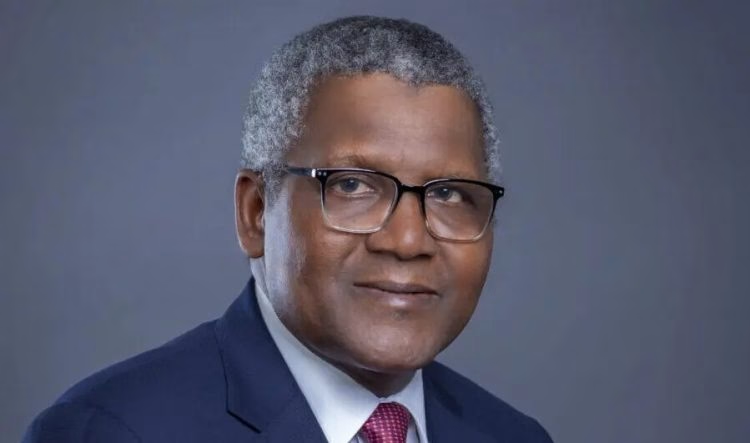
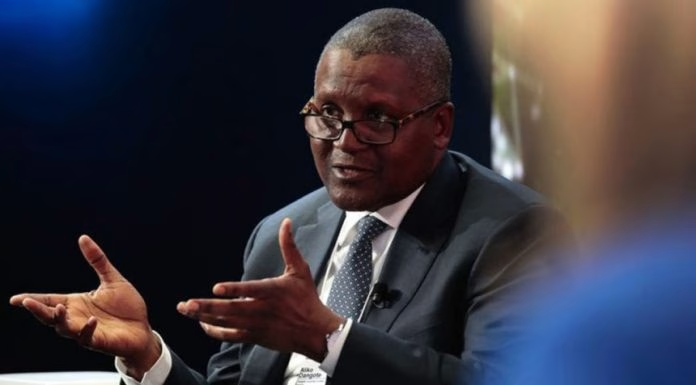
    Africa’s richest man, Aliko Dangote, has shed light on the significant revenue the Nigerian government earns from his flagship business, Dangote Cement.   Speaking at the 2025 Taraba International Investment Summit held on May 21, Dangote disclosed that the government receives 52 kobo for every N1 generated through the production and sale of cement.   “I’m sure it might be shocking to you to know that the federal government of Nigeria, not even the state, makes more money from, for example, our cement business. For every N1 we turn around, 52 kobo goes to the federal government of Nigeria,” the entrepreneur said. He said governments benefit from investments, whether private or public, when they create conducive environments for businesses to operate and pay taxes.   “We always say that the government has no business in business. If it’s true, they don’t have business in business. Though, how are they going to make money, educate people, you know, do the hospital, road, infrastructure? It’s through what? Taxes,” Dangote said.   “Have you ever heard of the American government owning an oil block? No, the American government doesn’t own an oil block. And they are the biggest producers of oil today in the world. But they make their money through taxes.”   He added that foreign investors are unlikely to invest in a country unless local investors thrive. Dangote said the group would continue to invest in Nigeria to create jobs and support local communities.    

Breaking:Dangote Refinery announces fresh petrol price slash nationwide

In a move that promises some relief for Nigerian motorists, the Dangote Petroleum Refinery has announced a fresh reduction in the pump price of Premium Motor Spirit (PMS), commonly known as petrol.


The new price now ranges from N875 to N905 per litre, depending on the location.


The announcement was made on Thursday via the refinery’s official social media channels. According to the statement, the adjustment reflects a N15 per litre cut across all regions and applies to both urban and rural retail points.


In the earlier pricing template, Lagos residents paid N890 per litre, while prices rose to N920 in the North East and South-South regions.

A breakdown of the revised prices shows, Lagos: N875, South-West: N885, North-East: N905, North-West & Central: N895, and South-South & South-East: N905


The Dangote Refinery urged consumers to purchase fuel only from its partner outlets and encouraged Nigerians to report non-compliance via its hotline: +234 707 470 2099 or +234 707 470 2100.


“Our quality petrol and diesel are refined for better engine performance and are environmentally friendly,” the company stated in the notice.


Our correspondent gathered the new reduction follows the return of a refund benefit policy offered to its customers earlier this week.

The development comes hours after The PUNCH reported that independent oil marketers resumed large-scale importation of petrol, as fresh data shows that over 496.17 million litres of petrol were brought into the country within nine days.


Findings using the Tanker Position Report, a document that tracks oil tankers’ movement and was obtained from Blue Sea Maritime by our correspondent on Monday, revealed that 370,000 metric tonnes of petrol were discharged at various depots. These products berthed at seaports between May 11 and 20, 2025.


On Monday, the 650,000 Lekki-based facility said the naira-for-crude deal allowed it to reduce the price of petrol, which translates to reduced costs at the pumps.

This is even as the company affirmed that the prices of petrol will remain affordable and stable.


They said that despite the fluctuations in global crude oil prices, it has consistently reduced the price of petrol.


The company, in a release signed by its Group Chief Branding and Communications Officer, Anthony Chiejina, said the decision to maintain price stability reflects its unwavering commitment to supporting the Nigerian economy and alleviating the burden on consumers from the increase in fuel prices by maintaining price stability.


(Punch)


BREAKING: Founder Of Defunct Diamond Bank, Paschal Dozie Is Dead

Pascal Gabriel Dozie, founder of the defunct Diamond Bank Plc and a former chairman of MTN Nigeria, has died at 85 from an undisclosed ailment.

Dozie was born in 1939 in Egbu village, Owerri, Imo state, Nigeria. He was born into the family of Charles Dozie, a Catholic Catechist.

Dozie attended Our Lady’s School Emekuku where he obtained his First School Leaving Certificate (FSLC). He subsequently attended Holy Ghost Juniorate Seminary and Holy Ghost College, Owerri, where he obtained his West African Senior School Certificate Examination.

After obtaining his high school certificate, he travelled to London where he studied economics at the London School of Economics and obtained a BSc in economics. Subsequently, he attended City University in London where he studied operational research and industrial engineering and obtained a master’s degree in Administrative Science.

Pascal Dozie began his career as an economist at the National Economic Development Office in the United Kingdom. He was also a part-time lecturer at the North Western Polytechnic, London. Between 1970 and 1971 he served as a consulting economist at the African States Consulting Organisation in Uganda.

In 1971 after he left his job in Uganda, he relocated to Nigeria at the request of his mother. In 1971 after his return to Nigeria, with his experience in Econometrics and Industrial Engineering he launched his first company, the African Development Consulting Group (ADCG). ADCG had worked with companies such as Nestle and Pfizer. He was subsequently hired by Clement Isong, then Governor of the Central Bank of Nigeria, to conduct some studies on the Co-operative and Commerce Bank.

Review of Pathogenic Contaminants of Fish and Sea foods

By Prof. John Abiodun Daramola


Overview of finfish, shellfish and contamination

Fish and shellfish are very important proteinous portion of the human diet worldwide. They come in extremely varied food products with numerous fish species, from marine and freshwater, from cold temperate and warm tropical waters, farmed or wild and processed or preserved in different ways. The above variations affect the microbiology of the fish, shelf life and safety.

Proper handling of fish between capture and delivery to the consumer is a crucial element in assuring final product quality. Also the standards of sanitation, method of handling, the time and temperature of holding fish are all significant quality factors. With a few exceptions, freshly caught fish are considered free of pathogenic bacteria of public health significance. The presence of bacteria harmful to man generally indicates poor sanitation in handling, processing and the contamination is almost always of human or animal origin.

On the other hand, food is considered to be microbiologically unsafe owing to the presence of microorganisms which may invade human body (e.g Salmonella, Escherichia coli, Listeria monocytogenes, etc) and also those that produce toxins ingested with a food such as Staphylococcus aureus, Clostridium botulinum and Bacilus cereus (Ofred, 2009). A number of microbiological tests of fish and fish products are used by authorities to check that the microbiological status is satisfactory. The purpose of these tests is to detect pathogenic bacteria or indicator organisms of faecal pollution such as Escherichia coli or other types of general contamination or poor handling practises (coliform bacteria, faecal streptococci, total viable count). However, microbiological testing can be costly and time consuming.

The microbiology of fish and fish products is complex and covers a wide range of both quality and safety related issues. When fish are alive, the muscle tissue is considered to be sterile, but after death, the barriers to microbiological invasion begin to break down and bacteria are able to grow more freely, although will be rarely found within deep muscle tissue. After the fish is caught and dead, the microflora may begin to change due to the varying environmental conditions.

Meanwhile, the term fish processing refers to the processes associated with fish and fish products between the time fish are caught or harvested and the final product delivered to the customer. The central concern of fish processing is to prevent fish from deteriorating and this should remain the underlying factor. Fish processing can be subdivided into fish handling-which is the preliminary processing of raw fish and the manufacture of fish products. Another natural subdivision is the primary processing level involved in the filleting and freezing of fresh fish for onward distribution of fresh fish and the secondary processing that produces chilled, frozen and canned products for the retail and catering outlets. Canned fish are fish which have been processed, sealed in an airtight container such as a sealed tin can and subjected to heat. Fish products are preserved using almost every food processing technique that has ever been developed (drying, smoking, freezing, canning, fermenting, high pressure processing) and of course, there is the increasing trend towards the consumption of high quality raw fish in the form of sushi.

Procedures for ensuring fish and seafood safety

The same rules about food safety and preparation apply to fish as with any other food products. If fish is left out on a work surface for any period of time, then it will decay or “go off” very quickly. Raw and cooked fish must not come into contact with each other due to the risk of cross contamination. This means using separate utensils and chopping boards for raw and cooked fish and wiping them down after use. Fish needs to be cooked thoroughly and at the correct temperature. One exception to this is sushi. The sushi is a popular Japanese dish which consists of raw fish, e.g. salmon, rolled in rice and seaweed. It is available in restaurants and as ready prepared packs in supermarkets. Generally, this is safe to eat as long as the fish used has been cooked or if raw, has been frozen beforehand in order to kill off any parasites.

Despite the wide range of canned fishery products that are available, there are relatively few operations which are unique. The correct pre-process handling techniques and refrigerated storage conditions of all fish for canning have much in common (in fact, there is very little difference in the handling methods of fresh fish and processed fish). Similarly, with the seaming, with retort operating procedures and post-process handling of containers, the methods adopted are independent of the type of the product. The purpose of retorting-that is to achieve a shelf-stable and safe product by the application of lethal heat remains the same for all canned fishery products. It is understandable that there are common guidelines which discourage manual handling of all processed wet containers and recommend that all retort cooling water be chlorinated.

There is a direct and unavoidable relationship linking raw material quality and end product quality and this holds as much for the production of canned fish as it does for fish which is bought fresh and prepared at home. Because handling conditions immediately after catching are responsible for rapid loss of the “fresh” quality, the quality of canned fish suffers whenever the raw material is temperature abused or physically damaged between catching and thermal processing. This means that the quality criteria considered desirable by cannery management when they assess their raw materials ought to be the same as those chosen by consumers when they purchase fresh fish. Fish for canning can be trimmed to remove bruises and other localised flesh defects. As the quality of fish deteriorates from the moment of death, all that can be hoped for by good handling is to retard the rate at which undesirable, quality degrading, changes occur.

All of the pre-treatments ought to be carried out under conditions of good manufacturing practise, which means that the rudimentary steps of process hygiene should be implemented. Satisfactory control of contamination from operating surfaces and raw materials is achievable with regular cleaning (i.e., by washing the product, cleaning the line and ancillary equipment) and limiting the duration of exposure at temperatures suitable for growth of spoilage microorganisms.

In summary, seafood safety tips involve carefully buying from a reputable seller, keep seafood cold and live shellfish alive, refrigerate live shellfish properly, do not cross-contaminate and cook seafood thoroughly (Schmutz et al., 2020).

Professor John Abiodun Daramola is the HOD, Department of Agriculture and Agricultural Technology as well as the Director, Centre for Agricultural Technology and Entrepreneurial Studies (CATES) Bells University of Technology, Ota, Ogun State, Nigeria

Access Bank Champions Stronger Alliances to Propel Intra-Africa Trade at Inaugural Africa Trade Conference

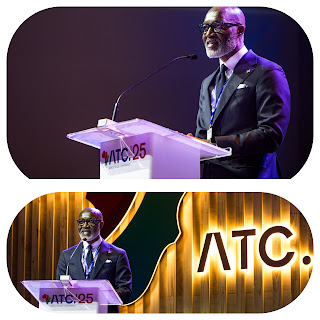
Cape Town, South Africa – March 12, 2025: Access Bank PLC, today, convened leading policymakers, business executives, and industry stakeholders in Cape Town for the maiden Africa Trade Conference, a platform dedicated to unlocking the continent’s vast trade potential. The conference serves as a strategic response to the shifting global trade landscape, emphasising Africa’s need to build resilient economies through deeper regional collaboration and enhanced financial and trade infrastructure.

Addressing participants, Roosevelt Ogbonna, Managing Director/CEO of Access Bank PLC, highlighted the need for Africa to take control of its economic destiny by fostering deeper collaboration, investing in financial infrastructure, and creating homegrown solutions that drive sustainable growth.

Ogbonna underscored the shifting dynamics of global trade and increasing need for Africa to look inward. The world, he noted, has become more fragmented, with rising nationalist tendencies and supply chain disruptions that have disproportionately impacted the continent. These challenges, he argued, present an opportunity for Africa to strengthen its trade networks, support local businesses, and build the resilience needed to compete on a global scale. However, for this vision to become a reality, several structural barriers must be addressed.

One of the critical issues Ogbonna identified is the challenges businesses face in securing capital. While many African enterprises have the ambition to scale, the excessive cost of financing often inhibits their ability to expand. He advocated a financial services sector that is designed to empower businesses, making capital more accessible and affordable.

“Many businesses on the continent struggle to find capital or access to capital and the right structure of capital, and when they do find it, the cost of capital is so significant that it makes it unbelievably expensive for them to be able to raise capital and still do business competitively. That has to change. We have to create a financial services sector that empowers businesses, one that makes it easier and seamless for businesses to be able to access capital, to able to invest in growth, invest in innovation, and of course, the muscle they need to expand beyond their local boundaries. It is clear that we need to create a network of Africa financial giants who are willing to create homegrown solutions to support the continent in achieving the objectives that we have set for ourselves.”

Beyond financial constraints, limited access to market intelligence remains a major hurdle. Many African businesses lack the necessary insights to identify trade opportunities beyond their local markets. Leveraging technology to enhance information-sharing can bridge this gap, enabling businesses to make informed decisions and seize growth prospects across the continent.

Apart from capital, Ogbonna highlighted the critical role of access to information. Many businesses struggle to find the data and intelligence necessary to make informed decisions and identify opportunities beyond their national borders. He stressed that leveraging technology to bridge this gap will be instrumental in driving cross-border trade and creating a more connected Africa. He also addressed the issue of trust between trading partners, noting that historic challenges, inconsistent regulations, and varying standards have contributed to a lack of confidence in intra-Africa trade. Overcoming this scepticism, he affirmed, requires deliberate efforts to harmonise standards, foster cooperation, and shift perceptions about the quality of African goods and services. He urged African businesses to take pride in what they produce, invest in local industries, and reject the notion that products made on the continent are inferior to those from elsewhere.

The chief executive  also emphasised the urgent need to modernise Africa’s trade routes and infrastructure. Drawing on historical examples, he pointed out that Africa once had well-established trade corridors that connected it to the Middle East and Asia. Today, however, inefficient transport networks and regulatory bottlenecks make it easier for businesses in Angola to trade with Portugal than with South Africa or Nigeria. He called for a renewed commitment to building the infrastructure and regulatory frameworks necessary to facilitate seamless trade across the continent, ensuring that goods, services, and capital can move freely between African nations.

Closing his address, Ogbonna challenged attendees to take concrete action toward realising Africa’s economic potential. He urged governments, financial institutions, and businesses to leverage platforms like the Africa Trade Conference to drive meaningful change. The goal, he emphasised, should be to create an Africa where businesses thrive, financial inclusion is a reality, and homegrown solutions set global benchmarks.

“Ultimately, let’s collectively agree that we will create value working as governments, financial services sector and businesses, leveraging our collective power to make the Africa we truly are proud of a reality,” he said.

The Access Bank Africa Trade Conference represents a significant step toward fostering dialogue, building partnerships, and driving policy initiatives that support Africa’s economic transformation. As the continent continues to navigate global uncertainties, events like this serve as a reminder that Africa’s future lies in its ability to collaborate, innovate, and build a sustainable trade ecosystem that benefits all.

Streaming link: Africa Trade Conference – 25

###

About Access Bank PLC

Access Bank PLC, a wholly owned subsidiary of Access Holdings PLC, is a leading full-service commercial bank operating through a network of more than 700 branches and service outlets spanning three continents, 24 countries and over 60 million customers. The Bank employs over 28,000 people in its operations in Africa and Europe, with representative offices in China, Lebanon, India, and the UAE.

Access Bank’s parent company, Access Holdings PLC, has been listed on the Nigerian Stock Exchange since 1998 (now Nigerian Exchange (NGX)). The Bank is a diversified financial institution which combines a strong retail customer franchise and digital platform with deep corporate banking expertise, proven risk management and capital management capabilities. The Bank services its various markets through three key business segments: Corporate and Investment Banking, Commercial Banking, and Retail Banking. The Bank has enjoyed what is Africa’s most successful banking growth trajectory in the last 20 years, becoming one of the continent’s largest retail banks.

As part of its continued growth strategy, Access Bank is focused on mainstreaming sustainable business practices into its operations. The Bank strives to deliver sustainable economic growth that is profitable, environmentally responsible, and socially relevant, helping customers to access more and achieve their dreams.

About Africa Trade Conference

Africa Trade Conference serves as a dynamic platform where industry leaders, policymakers, and stakeholders across the trade ecosystem come together to shape the future of commerce on the continent. By fostering dialogue on innovative trade solutions, sustainable practices, and market-expanding strategies, the forum underscores Access Bank’s commitment to unlocking Africa’s immense potential.

Participants will engage in insightful discussions, forge strategic partnerships, and explore opportunities that drive inclusive growth, positioning Africa as a pivotal player in global trade.

Access Bank invites you to join industry leaders, innovators, and other key players across Africa’s trade ecosystem at the Africa Trade Conference 2025.

How companies can protect their employees from cyber theft.

By Adeyemi A. Adesola

In today’s digital age, cyber theft is a major threat for businesses, affecting personnel at all levels. As businesses increasingly rely on digital platforms for communication, transactions, and data storage, hackers continue to exploit vulnerabilities via phishing, malware, credential theft, and social engineering attacks. Protecting employees from cyber theft entails not just securing personal information but also guaranteeing the company’s overall security. When employees become victims of cyber-attacks, businesses suffer financial losses, reputational damage, and operational difficulties. To mitigate these hazards, businesses must take proactive measures to ensure a safe working environment.
Increasing cybersecurity awareness is one of the best strategies to shield staff members from cyber theft. Employees lack of knowledge of the strategies employed by malicious actors contributes to the success of many cyber thefts today. In order to teach staff members how to spot phishing emails, fake websites, and social engineering scams, organizations should regularly provide cybersecurity training. Workers should be instructed to avoid clicking on links or downloading unauthorized files, as well as to confirm unusual requests for sensitive information.

To keep staff members updated on the most recent cyber threats, security training ought to be a continuous process rather than a one-time event.
In addition to raising awareness, putting in place robust access controls is essential to stopping cyber theft. Employers should make sure that workers only have access to the data required for their jobs by enforcing the principle of least privilege.

An additional layer of protection is added by using multi-factor authentication (MFA) for logins, which lowers the possibility of unwanted access even if credentials are compromised. Businesses should also set up safe password policies that mandate that staff members create strong, unique passwords and change them on a regular basis.
Securing communication channels is a key part of safeguarding staff members. Companies should promote the usage of encrypted communication platforms and make sure that emails containing sensitive information are encrypted. Employees should also exercise caution when exchanging information over the phone, particularly when dealing with unfamiliar individuals claiming to be corporate officials, IT personnel, or financial institutions.


Endpoint security measures such as firewall protection, antivirus software, and automatic software upgrades should be implemented on all work-related devices. Companies should also create device management rules, which enable IT workers to

Anambra seals church over ritual practices

The Anambra State Government has sealed a popular church known as “Children of the Light Anointing Ministry” run by Pastor Onyebuchi Okocha, also known as “Onye Eze Jesus”, over alleged involvement in controversial “Oke-ite” traditional practice.

The church located in Amafor village, Nkpor in Idemili North Local Government Area of the state was sealed by operatives of the state security outfit, “Agunechemba” during their visit to the premises on Sunday.

During the visit to the site, some substances including containers and other items were found at the premises.

This was disclosed in a post on the Anambra State government X handle on Sunday.

This development, it was gathered marked the third high-profile crackdown on “quick riches” spiritualists in Anambra, following the crackdown and arrests of popular native doctors and individuals engaged in “Oke-ite” practices.

The state authorities also sealed some of their shrines for engaging in such activities.

It was gathered that “Oke Ite” is a concoction made from human parts, animals, and herbs mixed in a mud pot and used for money rituals and the state authorities have identified it as a fraudulent scheme used by native doctors to deceive unsuspecting victims.Related News

Ken Emeakayi, the Special Adviser to the Anambra State governor, Chukwuma Soludo, on Community Security, also announced the closure of the church while leading members of “Operation Udo Ga-Achi” to the site.

Emeakayi stated that the action was taken in response to public complaints and a video where the pastor allegedly admitted to practising “Oke Ite” and other dubious rituals.

He said, “The state government will conduct forensic tests on liquid substances found at the ministry. While the state government does not oppose any religious practice, it will not tolerate those that promote a ‘get-rich-quick’ mentality.

“Additionally, forensic experts will analyse samples from River Bethsaida, where the spiritualist, also known as ‘Aka na Asa Uchu’, is said to conduct baths for individuals.

“The investigation aims to determine any potential health hazards associated with the practice. The Anambra State government remains committed to curbing fraudulent religious and ritualistic practices in the state.”

The spiritualist was said to have gained popularity for his style of taking followers to a river in Nkpor.

Ikenna Obianeri

Old, new naira notes remain legal tender – CBN

The Central Bank of Nigeria (CBN) says all denominations of Naira banknotes currently in circulation remain indefinitely valid as legal tender and cannot expire or be phased out.A statement on Friday by CBN’s Acting Director, Corporate Communications, Mrs Sidi Ali Hakama, said all banknotes, including the old and new designs of N1,000, N500, and N200, were valid.

Hakama urged the public to disregard misinformation regarding the validity of the old notes.

“In

line with the bank’s previous clarifications and to offer further assurance, the CBN wishes to reiterate that the subsisting Supreme Court ruling granted on November 29, 2023, permits the concurrent circulation of all versions of the N1,000, N500, and N200 denominations of the Naira indefinitely.

“For the avoidance of doubt, all versions of the Naira, including the old and new designs of N1000, N500, and 4200 denominations, as well as the commemorative and previous designs of the 100 denomination, remain valid and continue to be legal tender without any deadline.

“We, therefore, advise the public to disregard any claims that the old series of the aforementioned banknotes will cease to be legal tender on December 31, 2024.

“We urge Nigerians to continue accepting all Naira banknotes (both old and redesigned) for their daily transactions and to handle them with care to ensure their longevity,” she said.

The director encouraged the general public to embrace alternative modes of payment, such as e-channels, to reduce pressure on using physical cash. (NAN)

Folake Ani-Mumuney Bows Out Of FirstBank Service

“On a personal note, I am particularly delighted that the 130th anniversary year of our Bank has been a milestone year for me on many fronts and it is therefore fitting that I draw the curtain with flourish, in thanksgiving, as I ask you to ‘come and join me sing hallelujah, Jehovah Jireh has done me well’. Do raise a glass in toast to …finishing well!”

Truth be told, the amazing Amazon has built and impacted careers. Many of her former subordinates at First Bank during her tenure have become leaders in their own rights , but yet remains ever grateful proteges of this renowned progeny.

As the corporate Amazon steps out of FirstBank to seek out more opportunities, may her career path be paved with gold and the best that the universe has to offer.