
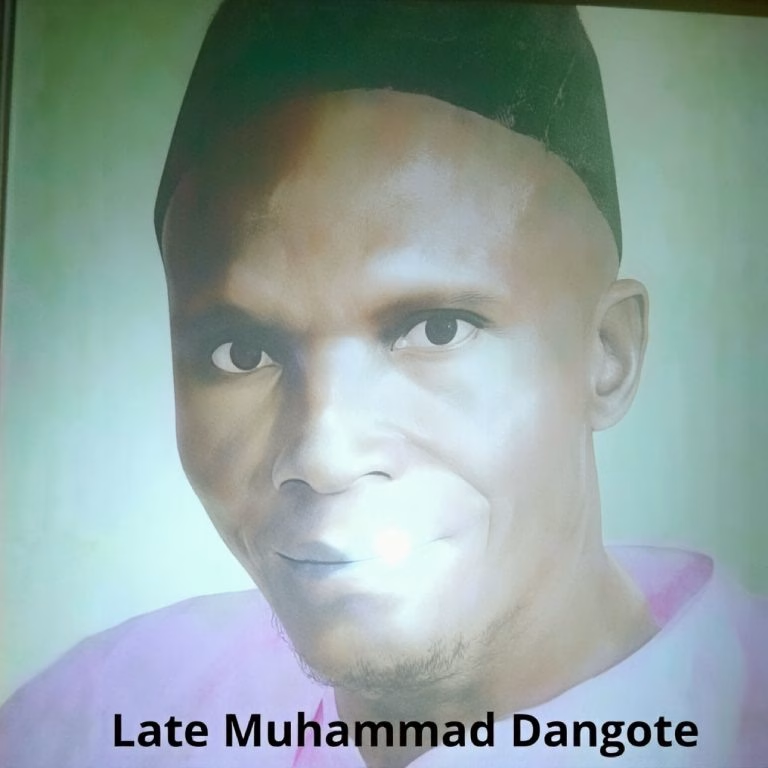
Alhaji Muhammad Dangote, the father of Africa’s richest man, Aliko Dangote, was a towering figure in commerce and public life whose influence stretched across Hausa land and several parts of Nigeria. Born in 1903 and passing away in 1966, Muhammad Dangote laid the foundation of a legacy that would later shape modern African enterprise.
He was born in an area known as Gote in what is today the Republic of Niger, a fact that earned him the nickname “Dangote,” which later became the family name. Despite his birth outside present-day Nigeria, his ancestral roots trace back to Kura Local Government Area of Kano State, from where his parents originally came.
Alhaji Muhammad Dangote emerged as a prominent businessman during an era when trade networks across northern and southern Nigeria were central to economic life. His commercial activities and reputation earned him respect far beyond Kano, making him a notable figure in Hausa land and across regional markets.
Beyond business, he played a role in public service. He was a member of the House of Assembly during the time of Sir Ahmadu Bello, the Sardauna of Sokoto, a period that marked the early political evolution of Northern Nigeria.
Muhammad Dangote was also closely connected to one of the most influential mercantile families in northern Nigeria. He maintained a strong relationship with Alhassan Dantata, the legendary industrialist, and this bond was further cemented through marriage. He married Hajiya Mariya Sunusi Dantata, Dantata’s granddaughter, who later became the mother of Aliko Dangote.
He had several wives, including Hajiya Adama Garba Sharif, Hajiya Sabuwa Hadeja, Hajiya Aishatu Aliyu Waziri, and Hajiya Mariya Sunusi Dantata, among others. Through these unions, he raised a large family whose members went on to play various roles in business and society.
His children include Khadija, Garba, Ahmad (Gwadabe), Ibrahim, Kabiru, Abdullahi, Umar, Sunusi, Aminu, Aliko, Bello, Sani, Zuwaira, Rabi, and Aishatu (Mowa).
Although he did not live to witness the global rise of the Dangote Group, Alhaji Muhammad Dangote’s life reflects the values of enterprise, community standing, and leadership that continue to define the Dangote legacy today. His story remains an important chapter in the history of indigenous African entrepreneurship.
— Newspot Nigeria