
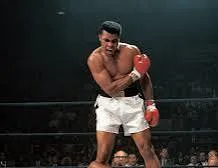
Miami, Florida. Cedars of Lebanon Hospital. May 9, 1981. 4:47 pm. Muhammad Ali walked slowly down the hospital corridor, more slowly than he usually moved. At 39, the greatest boxer of all time was beginning to feel that something was wrong with his body. A tremor in his hands, a slowness in his movements, something he couldn’t fight with his fists
But today wasn’t about Ali’s fight. Today was about saying goodbye to a friend. Bob Marley was dying in room 318. Ali had received the call two days ago. Rita Marley’s voice, calm, breaking: “Muhammad, if you want to see Bob, you need to come now. The doctors say days, maybe hours.”
Ali had canceled everything. He flew to Miami immediately because Bob Marley wasn’t just another musician to Ali. Bob was a brother in the struggle. The door to room 318 was partially open. Ali knocked softly. Rita appeared. Her eyes were red from crying.
—Muhammad. Uh, thanks for coming.
Ali hugged her gently.
“How is he?”
“Awake, weak. He’s been asking for you.”
Ali entered the room. Bob Marley lay on the bed, his body reduced to barely 80 pounds. The dreadlocks that had been his crown now looked thin against the pillow. His skin had taken on a grayish pallor. But when Bob saw Ali, his eyes lit up. A smile crossed his face
—Champ— Bob whispered. —You came.
Ali walked over to the bed and sat in the chair beside it. She gently took Bob’s hand.
—Of course I came, brother. Do you think I’d miss saying goodbye to the man who taught me about true courage?
Bob’s smile grew slightly.
—I didn’t teach you anything. You are Muhammad Ali. The greatest.
“The greatest boxer, perhaps,” Ali said. “But you, you were the greatest warrior. You fought with music, you fought with words, you fought with your whole spirit, and you never backed down.”
Bob’s breathing was labored. Every word required effort.
—Neither did you, champ. You gave up everything. Your title, your freedom, your best years, because you wouldn’t fight in Vietnam. Because you stood up for what you believed in.
Ali nodded.
It took me three and a half years. They took away my belt, they took away my license, they took away my ability to earn money, but I couldn’t fight in a war I didn’t believe in. I couldn’t kill people who never called me the N-word
“I know,” Bob said. “That’s why you changed my life.”
Ali looked surprised.
“I changed your life, brother. You’re the one who changed the world. Your music reached billions. You took reggae to every country. You united people across every divide.”
Bob shook his head weakly.
“But I learned courage from you. 1967. I was 22. I saw you refuse to go to Vietnam. I saw them take your title away. I saw the whole world turn against you. And you stood there and said, ‘I have no quarrel with those Viet Cong.’ You were willing to go to prison for your beliefs.” Bob paused, gathering his strength. “That taught me something, champ. It taught me that true courage isn’t fighting when the crowd is behind you. It’s standing alone when everyone thinks you’re wrong. That’s what I tried to do with my music. Stand up for something even when it cost me.”
Ali felt tears welling up in his eyes.
—Bob, you did more than defend. You changed hearts. You made people think. You made them feel. That’s bigger than anything I did in a ring.
“No,” Bob said firmly, with more strength than he’d had in days. “What you did in that ring changed everything. You weren’t just boxing. You were showing Black people that we didn’t have to accept what the world said about us. You were beautiful. You were proud. You were unapologetically yourself. That gave the rest of us permission to be ourselves, too.”
Ali squeezed Bob’s hand gently.
—We were fighting the same fight, only in different arenas.
“The same fight,” Bob agreed. “Freedom, dignity, the right to be who we are without apologizing.”
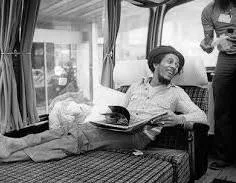
They sat in silence for a moment. Outside the window, Miami continued its noise. Cars, people, life moving on, while in this room time seemed suspended. Bob spoke again, his voice calmer now.
—Champ, can I tell you something?
—Anything, brother.
—I’m not afraid to die. I’ve made my peace with Jah. I’ve done what I came here to do, but I’m afraid of what I’m leaving behind
Ali leaned closer.
—What do you mean?
—I’m afraid people will remember the music but forget the message. I’m afraid they’ll dance to *One Love* but not live it. I’m afraid they’ll make me a legend and miss the point. —Bob’s eyes locked onto Ali’s—. Do you understand this? They made you a legend, too. Muhammad Ali, the greatest. But how many people remember why you were great? Not the boxing, the stance you took, the price you paid
Ali felt the weight of Bob’s words.
—You’re right. People remember the fights, the provocations, the spectacle, but they forget that I went to prison for my beliefs. They forget that I lost years I can never get back.
“Exactly,” Bob said. “So I need to ask you something, champ. When I’m gone, when they turn me into posters and T-shirts and nostalgia, will you tell them? Will you remind people what this was really about?”
Ali felt his throat close up.
—Tell them what, Bob?
Bob’s voice became urgent despite his weakness
“Tell them it cost something. Tell them courage always costs something. Tell them I didn’t die for the music. I died because I didn’t stop. I didn’t slow down. I didn’t compromise the message for my health. Tell them that’s what real commitment looks like.” Bob paused, breathing heavily. “Tell them about 1976. About the assassination attempt. About seven gunmen breaking into my house two days before the Smile Jamaica concert. About bullets hitting me, hitting Rita, hitting my manager. About how we still did that concert 48 hours later, performed for 80,000 people with bullets still in my body.”
Ali had heard the story, but never directly from Bob.
—Why did you do it? Why risk your life for a concert?
“Because the message was bigger than my life,” Bob said simply. “Because if I let fear stop me, then violence wins. Division wins, hate wins. I had to show that love is stronger than bullets, that music is more powerful than guns.” Bob looked intently at Ali. “Just like you showed the world that principles are more powerful than punishment. You could have gone to Vietnam. You could have kept your title, your money, your fame. But you chose principles over comfort. That’s what changed my life, champ. That’s what I tried to live by.”
Ali dried his eyes.
—Bob, you handled it better than I did. You never stopped, even when I was killing you.
“And that’s my regret,” Bob said quietly. “I should have stopped. I should have rested. I should have spent more time with my children, with Rita, with my mother. I thought the mission was more important than my life. But now, dying at 36, I realize the mission needed me to live. I could have done more if I had taken better care of myself.”
Ali felt something break inside him. Bob was telling him something important, something Ali needed to hear.
—Bob, are you telling me to slow down, to take care of myself?
Bob nodded weakly.
“Champ, I can sense something’s wrong with you. I see it in your movements. You’re fighting something.”
Ali’s hands trembled slightly. He’d been noticing it for months. The trembling, the slowness. He hadn’t told anyone yet.
—I don’t know what it is, but yes, something is wrong.
“Then learn from my mistake,” Bob said urgently. “Don’t sacrifice your life for your legacy. Take care of yourself. Rest. Allow yourself to be human. The world needs Muhammad Ali alive more than it needs another fight, another show, another performance.” Bob’s breathing became more labored. “Promise me, champ. Promise me you’ll take care of yourself. Promise me you’ll live because your children need you. Your wife needs you. The world needs you. And you can’t help anyone if you’re dead.”
Ali felt tears running down his face.
—I promise, Bob. I promise.
Bob smiled. Then he said something that would echo in Ali’s mind for the rest of his life.
—You taught me how to stand up. Now I’m teaching you how to rest. Both are courage, champ. Both matter.
Those words hung in the air between them. Two warriors. Two men who had given everything for their beliefs. One dying too young. One fighting to live longer. Bob’s voice grew even calmer.
—Muhammad, I need you to know something else.
—What, brother?
—Meeting you changed how I saw myself. You were a Black man who refused to be anything but proud, refused to be silent, refused to back down. You made me believe I could do the same with music. You made me believe one person standing up for the truth could change the world. —Bob paused— So everything I did, every song I wrote, every stage I stood on, that was partly because I saw you stand in that courtroom in 1967 and refuse to go to war. You inspired millions, champ, including me. And I just needed you to know that before I went
Ali completely collapsed. This man, this warrior, this voice of a generation was using his last breaths to thank Ali for the inspiration.
—Bob, I don’t know what to say.
—Don’t say anything. Just remember that when they ask you about Muhammad Ali, tell them about the cost. Tell them about the years you lost. Tell them it was worth it because you stayed true to yourself. And when they ask you about Bob Marley, tell them the same thing. Tell them I paid the price for the message and I would do it again.
Ali held Bob’s hand tighter.
—I’ll tell him, brother. I promise I’ll tell him.
They sat together for another hour, talking less, simply being present. Two champions who had fought different fights but bore the same scars. Finally, Bob grew too tired to stay awake. Ali got up to leave.
—Champ—Bob whispered, his eyes closed. —One more thing.
—Yes, Bob.
—It floats like a butterfly, stings like a bee, but also rests like a human. Promise?
Ali smiled through his tears.
—I promise.
Bob Marley died two days later, on May 11, 1981, at 11:45 a.m. He was 36 years old. Ali attended the memorial service in New York. He was asked to speak
“Bob Marley taught me something in our last conversation that I’ll carry with me for the rest of my life,” Ali told the crowd. “He taught me that courage has two forms: standing up when everyone tells you to sit down and resting when everyone tells you to act. Bob stood up his whole life. He stood up for justice, unity, love. And he paid the ultimate price. He worked himself to death for his message. That’s heroic. That’s dedication. But it’s also a warning. Don’t sacrifice your life for your legacy. Don’t give everything until there’s nothing left. Bob told me, ‘Take care of yourself. Rest. Live. Because the world needs you alive.’”
Ali paused, his voice breaking.
—Bob Marley changed my life twice. Once in 1967 when he saw me refuse to go to Vietnam and learned that courage means being alone. And once in 1981 when he was dying and taught me that courage also means knowing when to rest. Both lessons saved me. One gave me purpose. The other could buy me years.
For the next 15 years, as Muhammad Ali battled Parkinson’s disease, he often thought of that hospital room, of Bob’s trembling hand in his, of Bob’s final wisdom. Ali slowed down, stopped accepting every fight, every appearance, every demand. He rested. He spent time with his family. He took care of himself. And he outlived Bob by 35 years.
In 2016, when Muhammad Ali died at the age of 74, his daughter Laila spoke at his funeral.
“My father often spoke of Bob Marley, of their last conversation, of how Bob, as he was dying, told my father to live, to rest, to take care of himself. My father said that Bob gave him permission to be human, to stop performing and start living. That gift gave us decades more with him. He gave the world decades more of his wisdom, his presence, his love.” Laila continued, “Two warriors, two champions, two men who stood up when the world told them to bow. But in the end, Bob taught my father that the greatest fight isn’t always the one in the ring or on the stage. Sometimes the greatest fight is staying alive for the people who love you.”
Today at the Muhammad Ali Center in Louisville, there’s a small exhibit about Ali’s friendship with Bob Marley. It includes a photo of them together from 1978. Two icons, two fighters, two men who changed the world. Below the photo is a quote from Ali’s last interview about Bob.
Bob Marley told me, “You taught me how to stand up. Now I’m teaching you how to rest. Both are courage.” Those words saved my life. I stood up for justice, but I also rested for my family. Both mattered. Bob died at 36 because he never stopped. I lived to 74 because he taught me that it’s okay to stop. That’s the gift he gave me, and I’m grateful every day.
Legacy isn’t just music or fights. Legacy is the wisdom passed down between warriors. The understanding that courage takes many forms. The knowledge that standing up for something is important, but living for someone is essential. Bob Marley stood until he was killed. Muhammad Ali learned to rest before he was killed. Both were heroes. Both were champions. But only one lived long enough to tell the tale.
If you’re reading this and you’re consumed by a cause, a career, a mission, listen to Bob Marley’s last words to Muhammad Ali. You can’t help anyone if you’re dead. Take care of yourself. Rest. Live. Stand up for what matters, but also rest for those who matter. Both are courageous. Both are necessary. Bob Marley taught Muhammad Ali that lesson with his last breath. And, Ali lived an extra 35 years because he listened.