


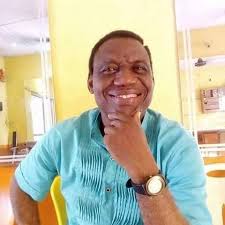
By Ayo Oyoze Baje
Quote
“To fight against untruth and falsehood,
…to fight for our memory;
for our memory of what things were like –
that is the task of the artist.
A people who no longer remembers
has lost its history and its soul.”
– Alekzander Solzhentsyn’
My dear fellow concerned Nigerian, there is no doubt that you are worried, like yours truly about the current, scary situation of the exponential rise of insecurity, the scandalous state of the twin evils of corruption and impunity in high places as well as the crippling crisis of pervasive poverty, worse still in a God- blessed county.
But one significant issue that comes out clearly is the gross lack of any sense of allegiance to the nation- state called Nigeria on the part of both the political leaders and some members of the followership. The latter of course, are those who erroneously believe that the political helmsmen are people to be feared and worshipped. Yet, it should not be so because of the serious impact of all these anomalies on the quality of life of the average Nigerian.
For instance, how do you feel to get to know that
Nigeria is currently ranked fourth in the 2026 Global Terrorism Index (GTI),as released by the Institute for Economics and Peace (IEP)?
How do you respond to the fact that Nigeria,as at 2026 has the highest rate of poverty globally, with an estimated 63% to 70.7% of its population living in poverty? The Nigerian National Bureau of Statistics reports that 63% of Nigerians are multidimensionally poor, suffering from simultaneous deprivations in health, education, living standards, and work.This translates to over 133 million multidimensionally poor individuals. In fact, Nigeria accounts for 12% of the global population living in extreme poverty, ranking it among the world’s largest contributors.
And how do you feel about the revelation that Nigeria also ranks 115th out of 123 countries in the latest Global Hunger Index( GHI )? With a score of 32.8, the country falls into the “serious” hunger category and is the second most hunger-affected country in West Africa, trailing only Niger Republic?
Definitely, to make the desired difference and change the narrative from the perspective of those who personalize political power and behave as might is right under a democratic dispensation and leaders who behave as if the lives of the heartless terrorists should be valued more than their voiceless victims, we have to learn from the hands of our founding fathers.
Lest we forget, once upon a time, precisely on August 13, 1947, a group of Nigerian patriots was at the London Office of the British Colonial Secretary, Arthur Creech-Jones to demand for the country’s political independence. They also used the opportunity to openly criticize the anti-people’s Richards Constitution. These worthy Nigerians included Dr. Nnamdi Azikiwe, Nyong Essien, P.M. Kale (from the Eastern Region).Others were Abubakar Dipcharima (Northern Region), Mrs. Funmilayo Ransome-Kuti, Dr. Olorun-Nimbe and Adeleke Adedoyin (Western Region). They were delegates of the National Council of Nigeria and the Cameroons (NCNC) political party.
But what was the colonialist’s response? “Go home and cooperate with the Nigerian Government,” he said.
Yet, they were not deterred. Instead, they held several meetings in places such as London, Oxford, Manchester, Glasgow, Edinburgh and Dublin to convince the British public that they meant serious business-that Nigeria was ripe enough for independence. Interestingly, they had tacit support from the West African Students Union, the Pan African Federation and the League of Coloured People.
So effective was their clamour that the British Press became hostile to them and their mission. For instance, the Daily Mail stated that it “can’t understand why Zik spends so much publicising himself” and “will remain a globe-trotter peddling racial hatred whenever he may roam.” On its part, the Daily Mirror described Zik as a two diametrically opposed persona. On one hand, it saw him as “ six feet of charm, of eloquence, of dignity, of ability.” On the other, it said our own Zik was “six feet of stupidity, of folly, of hate-blended prejudice.” And to put the icing on the cake of sarcasm, Sir Arthur Richards described the members of the said delegation as “self-appointed messiahs.”
So, how would this crop of passionate patriots feel about the sordid state of the nation were they still alive to feel the preventable pains, 79 years after?
It was in that same year, 1947 that Chief Obafemi Awolowo, the then Secretary -General of the Egbe Omodudwa which was formed under the leadership of Sir Adeyemo Alakija published his book, “Path to Nigerian Freedom”.
So, how would these noble citizens, who put the national interest far above any form of self-serving whims and caprices, feel, if it was possible to bring them back to life in our own 2026 Nigeria where brazen bandits and their negotiators openly dictate what should be done to our decision makers?
Without doubt, they would be outraged by the obscene level of insecurity, poverty, hunger and hopelessness bedeviling the nation.
The time has therefore, come for our ignorant youths to be weaned on the milk of nationalism, just as it obtains in the United States, Europe, China, Russia, Japan, North and South Korea. They should be told that all because King Jaja of Opobo vehemently resisted the bid by European merchants to increase the price of palm oil he was deported to Accra, Ghana on 15th August, 1887 and died mysteriously four years later at Teneriffe.
Our children need to know that none of our fathers who opposed the British, especially the Jajas, Zuberus and Ovaremis was spared. Our soldiers who they used to fight the First and Second World Wars against the Germans were neglected thereafter. Herbert Macaulay, the great intellectual who formed the first political party, the Nigerian National Democratic Party (NNDP) in 1922 was equally antagonised by the colonialists. But the party went on to win the three seats allocated to Lagos as made available by the Clifford Constitution in 1923.
They need to know the patriots who used the newspaper as a veritable vehicle to champion the cause of political freedom for Nigeria. These were the Lagos Weekly Record (1891) owned by Thomas Harito Jackson, The Dawn (1910, published in Calabar), Cousin Labour, Lagos Daily News by Macaulay and the Daily Times (1926) by Ernest Ikoli. Their efforts were complemented by that of the returnees in the mid-thirties including the Eyo Itas, Olu Alakijas and Nnamidi Azikiwes.
As we drive towards a proper restructuring of the country, as the best way forward out of our current political quagmire all hands should be on deck. Together we have to wage the war against swirling insecurity, sponsors of terrorism, ignorance, preventable poverty, hunger, diseases, corruption and nepotism .They know no north or south, east or west. They, along with overtly greedy politicians are our common enemies and not any tribe, religion or place of origin. We must all learn to place the national interest above selfish inclinations as our founding fathers did.
