


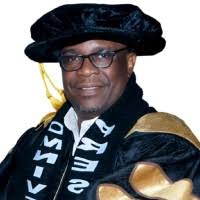
By Ayo Oyoze Baje
Quote:
“For Nigeria and Africa to convert demographic potential into sustainable economic development we must make skills visible, verifiable and portable*
– Prof. Tokunbo Akeredolu- Ale ( President/ Chairman,BoT, Omniversity, Missouri USA and Lagos Nigeria )
The global game -changing, paradigm shift from mere theoretical knowledge to the more relevant, life-changing, practical expression and application
in the vast and varied academic field
is gradually taking shape here in Nigeria. That is more so, through the Omniversity University Missouri, USA and Lagos, Nigeria.as reflected in the introductory quote made at the African Education Roundtable Conference, in October, 2025 . The buzz this has generated over the past year has elicited the significant questions of what the Practice -based Qualifications, Accreditation of Prio Experiental Learning ( APEL; ),Skills Recognition and ISO- Certified Credentials ( ICC ) are all about? And more precisely, what it really takes for one to qualify for any of the categories available, as well as the subsequent impact on the awardee’s professional pedigree.
The answers to these pertinent questions are amply provided, right from the horse’s mouth to serve as guidelines for others so interested in becoming beneficiaries. But firstly, it is necessary to understand APEL as the practice of assessing an individual’s demonstrated knowledge, skills and competence, regardless of how or where they were gained. That is against defined learning outcomes and occupational standards.
On its part, Competency based Evaluation refeames qualifications around observable and assessable outcome, which dovetails to what a learner can do in a work context. So far, to widen its impact the African Continental Qualifications Framework ( ACQF ) explicitly recognizes micro credentials as instruments for widening opportunities and enhances mobility across borders. In fact, the validation of ACQF came into being in July 2023. The ISI 21001:2018 therefore, provides an education management systems framework focused on learner needs and outcomes.
Of significance therefore, are the highlights provided by the awardees, to give insight into what it takes to qualify for laurels such as Honorary Doctorate, Honorary Fellowship Distinguished Fellowship, Honorary Professorship, Distinguished Professorship, Bachelor of Practice, Doctor of Practice and of course, Professor of Practice, across the wide spectrum of human endeavour.
According to Toromade Francis, who clinched the Professor of Practice in Strategic Management, he stated that: “During my evaluation, I was required to present verifiable board level strategy documentation, institutional turnaround records, and measurable performance outcomes across the organizations I have advised and led. The peer review process compelled me to clearly articulate the strategic logic behind my governance models and defend the institutional impact of my decisions.’
Furthermore , he explained that: “The scrutiny strengthened the precision of my strategic frameworks and refined how I communicate value creation at board level. The conferment formalizes decades of executive leadership into an academically benchmarked standing and strengthens my authority in high level advisory, restructuring, and cross border strategic engagements”. This is quite inspiring, is it not? Of course, it is!.
In a similar vein, Happiness Ndidi Obioha, who got the Professor of Practice in Cybersecurity has this to say: “My assessment required structured documentation of enterprise cybersecurity architecture, risk mitigation systems, and compliance alignment with recognized global standards. I presented incident response protocols, audit outcomes, and resilience planning frameworks that demonstrated measurable risk reduction.
“The technical interrogation strengthened my governance documentation discipline and reinforced the structural integrity of my cybersecurity models. The conferment enhances executive trust in my advisory role within digital risk, enterprise security governance, and regulatory compliance environments.” This is yet another mind-blowing testament to what Practice -Based Evaluation is all about.
With regards to Gabriel Oyediji, who got the Doctor of Practice in Agribusiness, Fisheries and Agricultural Innovation: “During my assessment, I presented agribusiness value chain optimization systems, fisheries productivity frameworks, and documented agricultural innovation outcomes with verified performance metrics. The process reinforced analytical clarity around production efficiency and market integration strategies.
“The conferment affirms my leadership within structured agricultural governance and enhances my credibility with development partners and agribusiness stakeholders.” This is certainly a well-deserved honour.
As for Alex Ndudi Enebeli, decorated with the Doctor of Practice in Strategic Management and Leadership Development, he expressly explained that his evaluation required presentation of executive leadership transformation frameworks, governance restructuring systems, and measurable institutional change outcomes. The structured scrutiny strengthened articulation of his leadership architecture models. The conferment therefore, enhances his advisory authority in executive development and strategic institutional transformation.
The distinguished fellowship confered on Oba Clement Olusegun Akinyemi, according to him followed structured review of his sustained traditional governance leadership, community development initiatives, and documented socio economic stabilization outcomes.
It formalizes recognition of structured institutional stewardship and strengthens broader engagement between traditional governance systems and contemporary institutional frameworks. This obviously emphasizes achievements focused on empirical evidences on ground beyond sheer propaganda by words of mouth.
An interesting angle to the honours given by Omniversity came to light with the conferment of Fellow of Practice in Public Administration on
Azubuko Ugochukwu.
As he stated he presented documented governance reform initiatives, institutional restructuring systems, and measurable administrative outcomes to earn it. The structured review validated sustained public administration impact. The conferment enhances his credibility within policy advisory and governance reform platforms.
Not left out is the Fellow of Practice in Human Capital Development conferred on Bulus James,. According to him, his evaluation required documentation of national training frameworks, competency development systems, and measurable workforce transformation outcomes. The fellowship formalizes recognition of sustained human capital development leadership and strengthens his advisory authority in institutional capacity building. This is a feather to the cap of a seasoned professional.
As for Honorary Fellowship recognition, it reflects documented review of structured leadership systems and measurable sectoral impact. The conferment formalizes public acknowledgement of enterprise governance, agribusiness innovation, manufacturing leadership, humanitarian systems, maritime governance, pharmaceutical production, and security administration contributions. It strengthens stakeholder trust and enhances institutional legitq across respective domains.
In all of these projects, programs and processes the profound message has been passed to the public that we should be better judged as professionals by the works produced rather than the knowledge acquired. That underscores why the names of .Bill Gates, Mark Zuckerberg,Steve Jobs, Evan Williams and Larry Ellison continue to ring a loud bell in the world of high technology,the same way Prof. Wole Soyinka resounds across the global literature in English language and Nike Morica Okundayo reverberates in African textile industry.
