


By Esther Onyegbula
A Professor of English Studies at Obafemi Awolowo University, Chijoke Uwasomba, has cautioned the Federal Government against the creation of state police, warning that the initiative could be abused by state governors and further weaken Nigeria’s already fragile policing system.
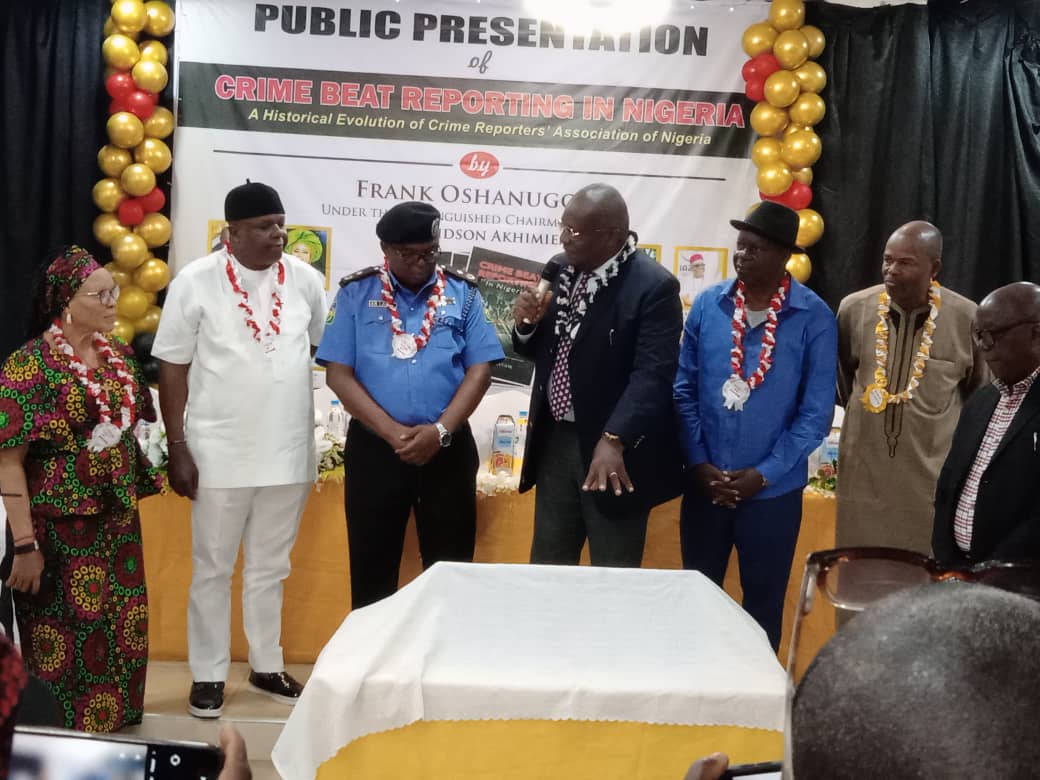
Uwasomba gave the warning in Lagos during the public presentation and review of a book, Crime Beat Reporting in Nigeria, authored by veteran journalist, Frank Oshanugor.
According to the don, Nigeria’s police institution had suffered significant setbacks over the years, particularly during military rule, and introducing state-controlled policing could exacerbate existing challenges.
He said: “The military destroyed the Nigerian police force years ago. Creating state police will further destroy it because governors may abuse the instrument of state police.”
Uwasomba, who reviewed the 345-page publication, described the book as a vital contribution to the discourse on crime, justice and media responsibility, recommending it to journalists, scholars and policymakers.
He noted that the book provides a comprehensive framework for understanding crime reporting and the broader criminal justice system, stressing that it could help shape informed public perception and policy decisions.
The professor highlighted that the publication contains an extensive catalogue of criminal offences, including homicide, murder, manslaughter, drug trafficking, kidnapping, terrorism, armed robbery and arson, among others, offering practical insights into their nature and reportage.
He further explained that the book delves into the role of crime reporters as specialists who must build credible networks across security and law enforcement agencies such as the Nigeria Police Force, Department of State Services, Economic and Financial Crimes Commission, National Drug Law Enforcement Agency, and other relevant institutions.
Uwasomba also underscored the challenges faced by crime reporters, particularly in accessing information, noting that the Freedom of Information Act provides an opportunity for improved transparency and more effective reporting.
Earlier, Oshanugor formally unveiled the book, describing it as a product of over three decades of experience in crime reporting and editing.
He said the work was conceived as both a professional guide and a historical documentation of crime journalism in Nigeria, as well as the evolution of the Crime Reporters Association of Nigeria.
According to him, the book is targeted at a wide audience, including practising journalists, students of mass communication and criminology, as well as researchers interested in crime and security reporting.
Oshanugor expressed appreciation to colleagues, members of the Crime Reporters Association of Nigeria and other stakeholders who contributed to his career and the development of the publication.
Chairman of the occasion, Dr. David Akhimien, described the author as a leading authority in crime reporting, noting that his previous works have continued to shape academic research in criminology.
Akhimien urged journalists and the general public to read the book, saying it represents a significant intellectual contribution capable of raising professional standards in crime reporting.
Also speaking, the Inspector-General of Police, Kayode Egbetokun, who was represented by Deputy Commissioner of Police, Adeshina Lawal, commended the author for producing what he described as a well-researched and insightful publication.
The police boss noted that the book provides a constructive perspective on the relationship between the media and law enforcement agencies, adding that it would enhance professionalism and mutual understanding between both institutions.
