


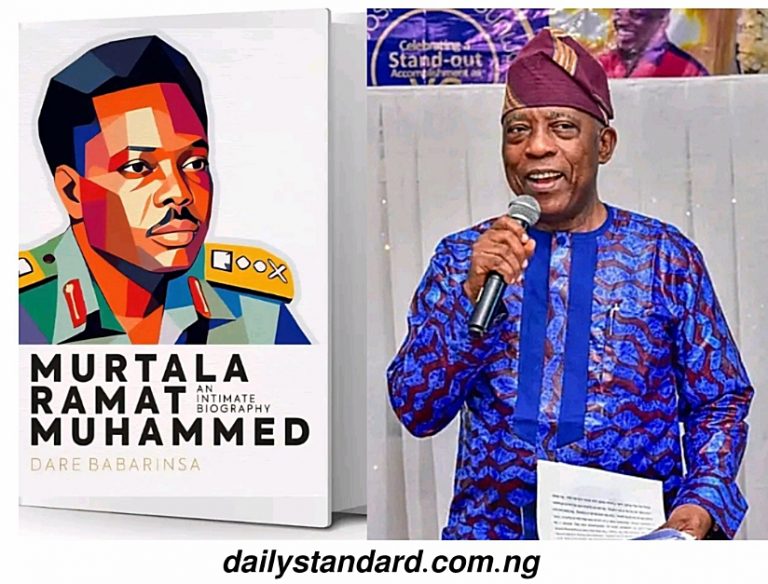
Fifty years after his sudden departure from the centre stage, General Murtala Ramat Muhammed remains a living presence. In six giddy months of power, he changed Nigeria for the better. His head-on collision against corruption and abuse of office led him into conflict with powerful people and entrenched interests. In his quest to cleanse the Augean stable, he must have hurt some innocent people, but his intention was appreciated by Nigerians who were eager to embrace a good and strong leader determined to bring government to the service of the people.
Abuja, the capital he decreed for Nigeria has become one of the fastest growing cities in the world. The presidential system his regime recommended has endured at the centre of our democracy. He was a man in a hurry to accomplish many and great and good things. For many Nigerians, the Muhammed regime was the magic moment in our country march to greatness. Then it vanished before we knew it.
One person who has lived with the daily reality of his fiery departure is Mama Ajoke Muhammed, the petite beauty who for the past 50 years has carried her burden with dignity and courage. She has been a widow for most of her 84 years but God has given her a good recompence in the lives of her children and grandchildren. When she married Muhammed at 22 in 1963, she did not know she would live the rest of her live in the shadow of his greatness. Through a life of ceaseless devotion to his legacy, she too has acquired greatness.
Muhammed was a very young man when he accomplished great deeds that put him at the centre stage of history. At 27, he could have become the Nigerian Head of State had he gunned for it. He was the leader of the second coup of July 29, 1966 that brought General Yakubu Gowon to power. But he did not lead his colleagues to seize power; only to right what he perceived as the wrong that was done to the old Northern Region by the coup makers of January 15, 1966. The counter-coup of July 29, 1966 became a gory affair that led to the death of the Head of State, Major General J.T.U. Aguiyi-Ironsi, the Governor of the Western Region, Lt. Colonel Adekunle Fajuyi and many other officers, mostly of Eastern Nigeria origin. In the earlier coup of January 15, 1966, all senior military officers of Northern origin, were killed, with the notable and lucky exception of Lt. Colonel Yakubu Gowon, who emerged as Ironsi’s Chief of Staff.
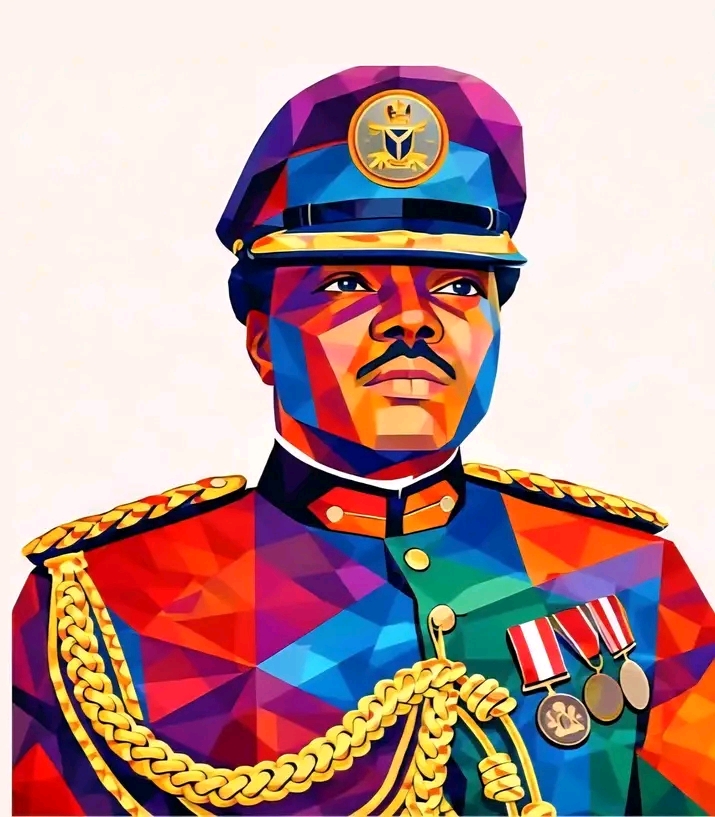
What could have been the fate of Nigeria if Muhammed had come to power in 1966 at just 27? Some of his colleagues were not thinking of power; they were only occupied with settling scores. Some of them were also thinking of pulling the North out of Nigeria. Then after two days of tension, Gowon at 33 was finally announced as the new Head of State and Supreme Commander of the Armed Forces.
Muhammed wanted Gowon to make new appointments and change all the governors appointed by Ironsi; Hassan Usman Katsina of the North, David Ejoor of the Mid-West and Emeka Ojukwu of the East.
In the hazy hours after the assassination of Ironsi and Fajuyi, it became clear that Gowon would emerge as the new Head of State. Therefore, Colonel Adeyinka Adebayo, Gowon’s predecessor as the Chief of Staff, Army, was tapped as the new Governor of the West to replace the assassinated Colonel Fajuyi, and he quickly resumed in Ibadan.
However, Gowon would not appoint governors for the other regions, preferring to retain the Ironsi team despite pressure from Muhammed and other officers who believed that if there was a change of guards at the centre, there should be a change of guards at the regions. What would have been the fate of Nigeria if Gowon had taken the advice of Muhammed? Would there have been a Nigerian Civil War if Ojukwu had been removed as the military Governor of the Eastern Region?
General Murtala Ramat Muhammed remains a living presence, fifty years after
Muhammed was just 28 when he was asked to form a new division of the Nigerian Army, the 2nd Division. In 1967, the Biafran Army, under the command of Colonel Victor Banjo, invaded the Mid-West and in a spectacular blitzkrieg was knocking at the door of the West. It took the effort of the newly formed 2nd Division of the Nigerian Army to halt the rebel forces at the battle of Ore and then sweep the Biafrans out of the entire Mid-West after a month of intense military campaign.
Today, how many 28-year-old officers could be trusted to head a brigade not to talk of forming a new one? When Muhammed led his troops to Benin, the military governor, Colonel David Ejoor, had fled. Muhammed quickly appointed one of his officers, Major Samuel Ogbemudia, a Benin man, as the new acting Governor. Gowon later confirmed the appointment. It was that kind of decisiveness that was to characterize Muhammed’s career as a public servant.
Then he became Head of State at 36. In the 200 days he was in power, he shook every aspect of Nigeria, tackling corruption, reforming the public service, establishing seven universities, creating a new federal capital and redirecting Nigerian foreign policy. At that period, the Sahel Region was experiencing one of the worst droughts in history and cattle importation from Chad and Niger had dried up. Muhammed authorized the importation of beef from Argentina. This was a big relief to citizens across the country.
Muhammed assassination was a great blow to the new Nigeria that was emerging when our leaders could move about the country with minimal fuss. He was a different kind of ruler; decisive, firm, competent, empathic and industrious. He got things done and made Nigerians proud of their country. He was young, handsome and attractive. He was loved deeply and Nigerians responded to him with enthusiasm. He became the first Nigerian ruler to be identified by his first name; Murtala. It was as if there was a covenant between him and his people. Then he was assassinated at 37.
Today, Nigerians are redefining the meaning of youths. Many of our young governors are in their fifties. Political parties are parading youth leaders in their forties and fifties. There are many of our citizens who are in their thirties and forties, believing wrongly that they are still too young to marry! They need to know that the wheel of time moves ceaselessly. It does not wait for anyone. It did not wait for Murtala Muhammed. Therefore, in fifty years, another generation of grateful Africans would still celebrate the 100th anniversary of the passing of a great man.
Chief Dare Babarinsa, MON, is the Chairman, Gaskia Media Ltd
