


By Ayo Oyoze Baje
Quote
“Illegal mining has evolved into a major national security threat, linked to criminal and terrorist financing… Combating it has become an urgent priority to stop economic sabotage.”— NSCDC / Mining Marshals Squad
Though Nigeria is abundantly blessed with over 44 solid minerals, spread across the 36 states and the Federal Capital Territory (FCT), Abuja, with these enormous resources expected to drive sustained construction, power generation, and manufacturing, the menace of
Illegal mining in the country costs an estimated, whopping $9 billion annually in lost revenue.
Furthermore, illegal mining severely degrades the green environment, and directly fuels the recurring insecurity. This crisis is characterized by three main threats such as Insecurity and banditry: Illicit extraction—particularly of gold, lithium, and tin. These are intertwined with armed conflict, banditry, and militia groups that use the proceeds to fund their operations.
So serious the matter is that the
Osun State Governor Ademola Adeleke recently raised the alarm over an unregulated influx of individuals from northern states into Osun’s mining communities. He warned that these movements risk importing banditry and terrorism financing.
That informed the establishment of a Mining Community Intelligence Architecture with the noble aim to combat banditry and criminal infiltration linked to illegal mining in the state. The new security framework mandates the creation of seven-member community committees across the Ife-Ijesa axis to profile newcomers and improve intelligence gathering.
In other parts of the country, the most affected areas with the key mineral deposits that span from industrial materials including limestone and kaolin to precious metals like gold and lithium are Zamfara, Kaduna, Kogi, Kwara, down to Ondo, Osun and Oyo.
For instance, some of the major, commercially viable solid minerals and their primary states of occurrence, include gold and lithium found in states such as Zamfara, Kaduna, Kwara, and Nasarawa. Also, industrial minerals like limestone/kaolin/talc are located across Kogi, Ogun, Sokoto, and Niger states.As for energy and metal ores such as coal/iron ore/tin they are found mostly in Enugu, Kogi, and Plateau states.
Other important deposits including lead/zinc are found in large quantities in Ebonyi/Taraba while bitumen is in Ondo and Lagos states. This piece of vital information is .based on data from Facebook USAfrika
The resultant effects of illegal mining include environmental disasters: unregulated excavation and the use of toxic chemicals that severely degrade farmlands and contaminate important water sources, such as the Osun River.
With regards to economic sabotage there are foreign cartels and illicit syndicates who exploit artisanal miners, smuggling strategic minerals out of the country with little to no taxation or royalties returning to local communities. And it has been revealed that some of the traditional rulers are accomplices in this unpatriotic act. But what are the significant factors facilitating illegal mining of minerals in Nigeria? That is the million-naira question.
According to experts on solid mineral mining and the after effects on the host communities in particular and the country in general, illegal mining thrives here due to extreme poverty, weak regulatory enforcement, and powerful cartels that smuggle billions in minerals annually. There are also corrupt elites and foreign actors who fund illicit operations, while locals participate for mainly for survival, as we are currently experiencing in the country. But what is of importance are the needed steps to be taken to frontally tackle the criminal act and save the country from its deleterious, socio-economic effects?
Solutions to illegal mining in Nigeria require a holistic and multi-dimensional approach that combines technology, law enforcement, policy formalization, and community integration. In this regard, according to the
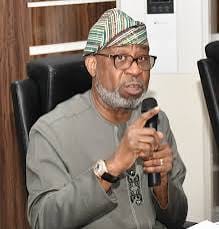
Minister of Solid Minerals Development, Dele Alake, the federal government is deploying
an uncompromising crackdown on illegal mining and its financial sponsors. He emphasized it as a national security threat that fuels banditry.
The government is therefore, utilizing tech-infused surveillance and the Nigeria Mining Marshals to dismantle illicit camps nationwide. But more has to be done than said for the enforcement of this laudable initiative.
In the light of this is
zero tolerance for sponsors of illegal mining in the country. That perhaps, explains why the Ministry is actively tracking wealthy backers and financiers of illegal operations. That is, rather than focusing mainly on low-level artisanal workers. So far, operations have resulted in the arrest of over 300 illegal miners and the prosecution of more than 150 suspects, including foreign nationals. This is highly commendable.
Another bold step taken forward to secure vast mining corridors is the Federal Executive Council (FEC)’s approval of N2.5 billion for satellite surveillance equipment to monitor mining sites in real-time.
Hitting the nail on the head, Alake has urged the traditional rulers and local communities to stop the selling of land to unauthorized miners and to report illicit activities to security agencies.
Good enough, it is on record that the Ministry of Solid Minerals has revoked thousands of dormant mining titles and continues to formalize artisanal miners into regulated cooperatives to plug revenue leakages.There are ongoing efforts to track ongoing enforcement updates and read official statements directly on the Ministry of Solid Minerals Development portal.
On the whole, much as one commends efforts to curb this menace, the federal and state governments should keep enforcing the crackdowns and regulatory reforms through the Mining Marshals. Also, the Nigerian Security and Civil Defence Corps (NSCDC) who are deployed as a specialized squad of “Mining Marshals.” should be well trained and equipped to curb the activities of the criminals.
Doing so will eventually save Nigeria from the loss of huge revenue, protect the environment from degradation and provide livelihood for several job-seeking Nigerians.
