By Asade Mustapha
There are moments when the true character of a public servant is revealed, not by the office he occupies, but by the values that have guided him throughout his journey.
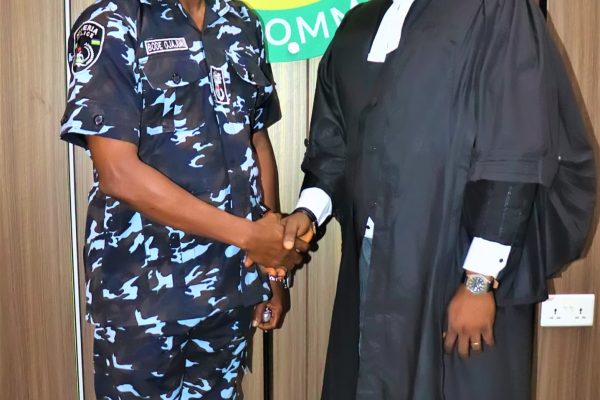
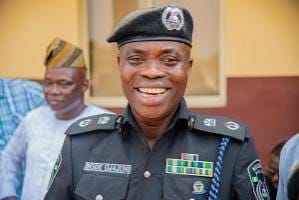
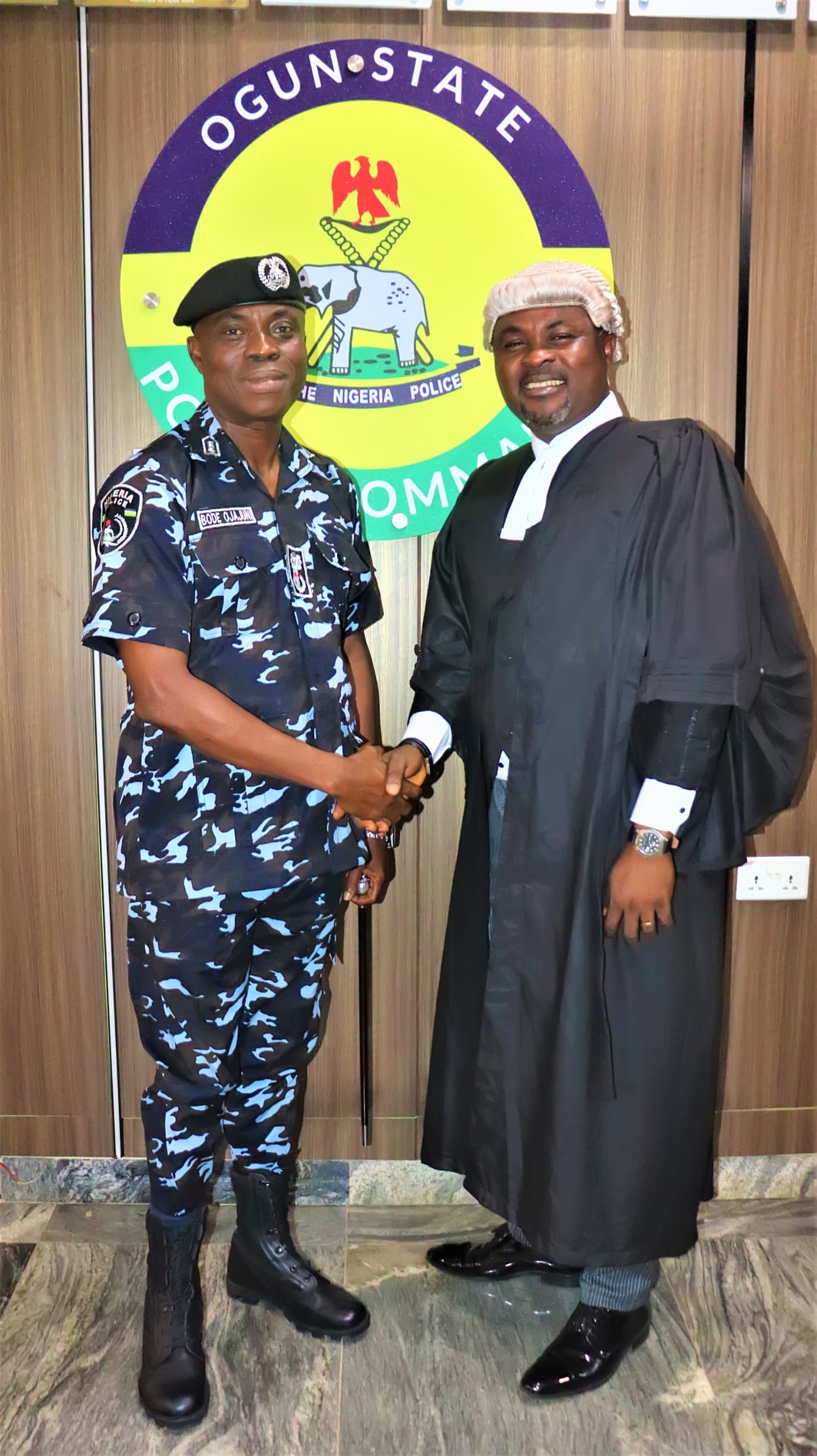
For the Commissioner of Police, Ogun State Command, CP Bode Ojajuni, integrity is more than a professional obligation. It is a principle deeply rooted in his upbringing, his faith and the lessons he received from his late father.
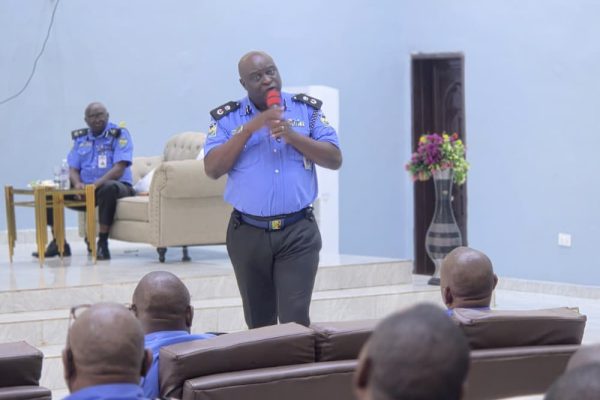
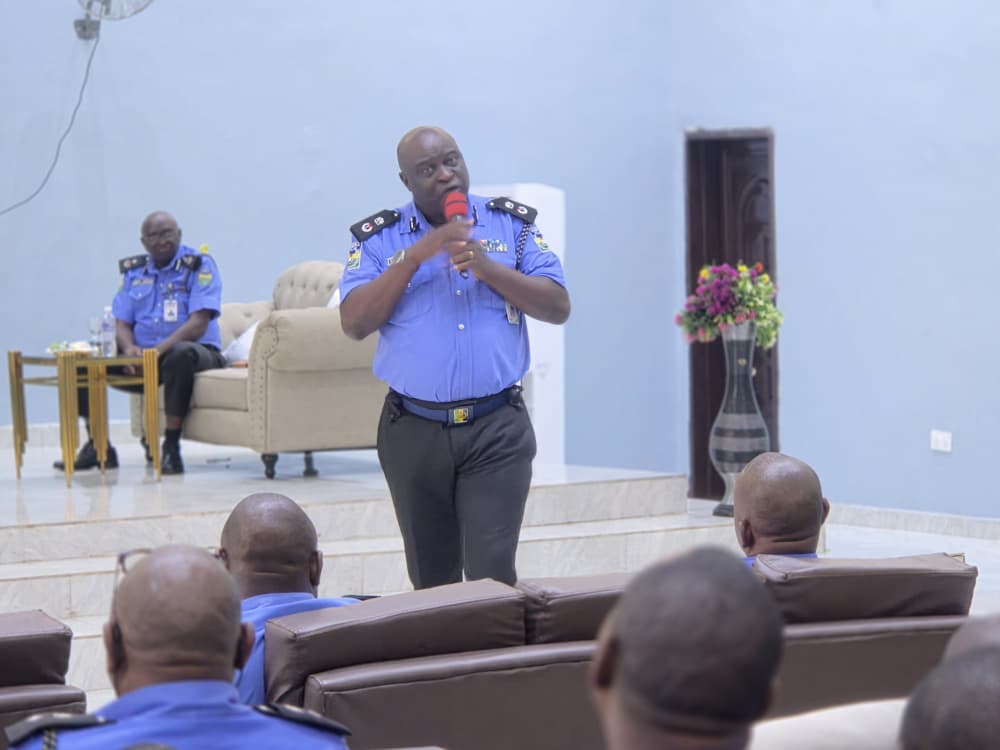
Speaking at the administration of the Sacrament of Confirmation at St. Martin Catholic Police Chaplaincy, Ogun State Police Command Headquarters, Eleweran, Abeokuta, the Commissioner offered a personal account of the values that have shaped his life and career.
In a remarkably direct statement, he declared:
“I have never, in my life, demanded or collected a bribe.”
For a police officer entrusted with public authority, the statement carries significant meaning. But for Ojajuni, it is a reflection of a principle established long before he attained his present position.
He attributed his uncompromising position on corruption to the upbringing he received from his late father, whom he described as a lay preacher and a man who deliberately placed him on the path of faith, discipline and integrity.
“My father was also a lay preacher. He placed my feet on the path of the Lord and taught me to live with integrity,” he said.
The Lesson From A Father
Perhaps one of the clearest examples of his father’s influence came early in Ojajuni’s police career.
The Commissioner recalled that he once obtained a loan from the Police Cooperative to assist his father with the renovation of his house. He travelled from Lagos to Ondo State with the money, expecting to hand it over to his father.
But his father did not simply accept the money.
He asked his son where the money came from.
When Ojajuni explained that it was a loan obtained from the Police Cooperative, his father initially refused to accept it.
The young police officer had to return to Lagos and obtain a certificate of indebtedness to establish that the money had been legitimately borrowed.
Only after he produced the document did his father accept the money.
That simple family experience left a lasting impression on the young Ojajuni.
It was a lesson in accountability: that even when a person has good intentions, the source of what he possesses must be legitimate.
Years later, that lesson would become part of the philosophy guiding his public service.
“Now you can see the reason why I said I don’t demand or collect bribes. Why would I? It is my home training and background, and because my father put my leg on the path of the Lord,” he said.
Parenting
As An Investment
The Commissioner used the occasion to challenge parents to take the moral and spiritual upbringing of their children seriously.
Addressing the parents of the confirmands, he described the values they were passing to their children as an investment whose benefits would eventually extend beyond the family to the wider society.
“You have put your children on the path of the Lord. You will reap the fruits of your labour,” he said.
According to him, children raised with sound moral values are better positioned to become responsible citizens and future leaders who can make positive contributions to Nigeria.
He urged parents not to measure their success merely by the material things they provide for their children, but also by the character they help to build.
For Ojajuni, his own life is evidence of that investment.
“My father is no longer alive, but he used to tell me, ‘You are working for yourself.’ Today, who is enjoying the benefit of that lesson? It is me.
“I am the Commissioner of Police today. I am the one enjoying the responsibilities, privileges and honour that come with this office,” he said.
A Childhood Shaped By Faith
The occasion also took the Commissioner down memory lane.
As he entered the Catholic Church and saw photographs depicting the journey of Jesus Christ, he said he was reminded of his childhood in Ondo State.
Ojajuni recalled growing up as a member of the Methodist Church located opposite a Catholic Church.
Despite belonging to different denominations, the two Christian communities maintained a cordial relationship.
They supported one another during annual harvest celebrations, while their choirs regularly participated in each other’s programmes.
For the young Ojajuni, it was an early lesson in religious tolerance, Christian fellowship and peaceful coexistence.
He also recalled the humorous exchanges between his father and Catholic worshippers in their community.
His father would jokingly tell Catholics returning from their earlier church service:
“You went where God has not arrived. We are just going.”
The Catholics, he recalled, would respond:
“No, God has come and gone. You are just going there to meet empty chairs.”
Behind the humour was a community where differences in denomination did not prevent friendship, mutual respect and cooperation.
Those childhood experiences, Ojajuni said, contributed to his appreciation of Christian unity.
When A Sing Became A Message
The Commissioner also shared an experience he considered spiritually significant.
He recalled attending a church service at Mosafejo around March, shortly before his appointment as Commissioner of Police in Ogun State.
During the service, a gospel singer performed a song that had earlier been rendered by the Bishop at the Confirmation ceremony.
The song made a strong impression on him.
“I told an AIG sitting beside me during the service: ‘Sir, that woman is ministering to me,’” he recalled.
Five days later, he was appointed Commissioner of Police of Ogun State.
For Ojajuni, the experience remains a reminder that messages may sometimes come through seemingly ordinary circumstances.
He therefore encouraged Christians to pay attention to sermons, songs and other forms of worship.
“Sometimes, God speaks to us, but we may be unconscious of the message He is sending,” he said.
He urged the congregation to listen beyond the physical sound and literal meaning whenever they believe God is communicating a message.
Recognising Service
The Commissioner also used the occasion to appreciate the Catholic clergy for their contributions to the spiritual wellbeing of police officers and their families.
He particularly commended the Catholic Chaplain, Rev. Fr. (CSP) Paul Omotosho, whom he recalled meeting during his earlier service in Lagos.
Ojajuni remembered the priest’s determination to establish a church within the police community in Ikeja.
He said the priest’s achievement had impressed him from the beginning and made him believe that he was destined for greater accomplishments.
Today, he expressed gratitude for the priest’s continued service and prayed for his further elevation and usefulness to God and humanity.
A Ceremony Beyond The Ceremony
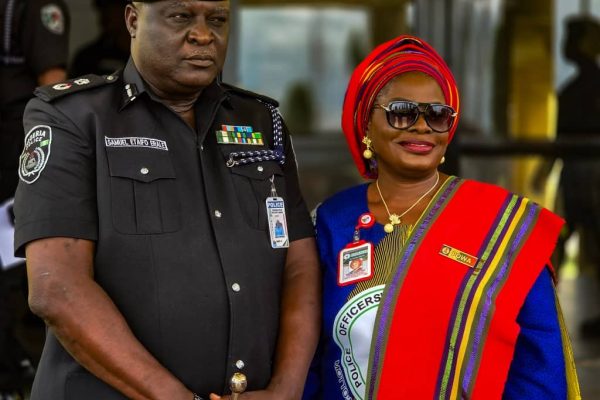
The Confirmation ceremony, presided over by the Catholic Bishop of Abeokuta Diocese, Most Rev. Dr. Peter Olukayode Odetoyinbo, also featured the blessing of the newly constructed Grotto of Our Mother of Perpetual Help and the foundation-laying ceremony for the Catholic Chaplains’ House.
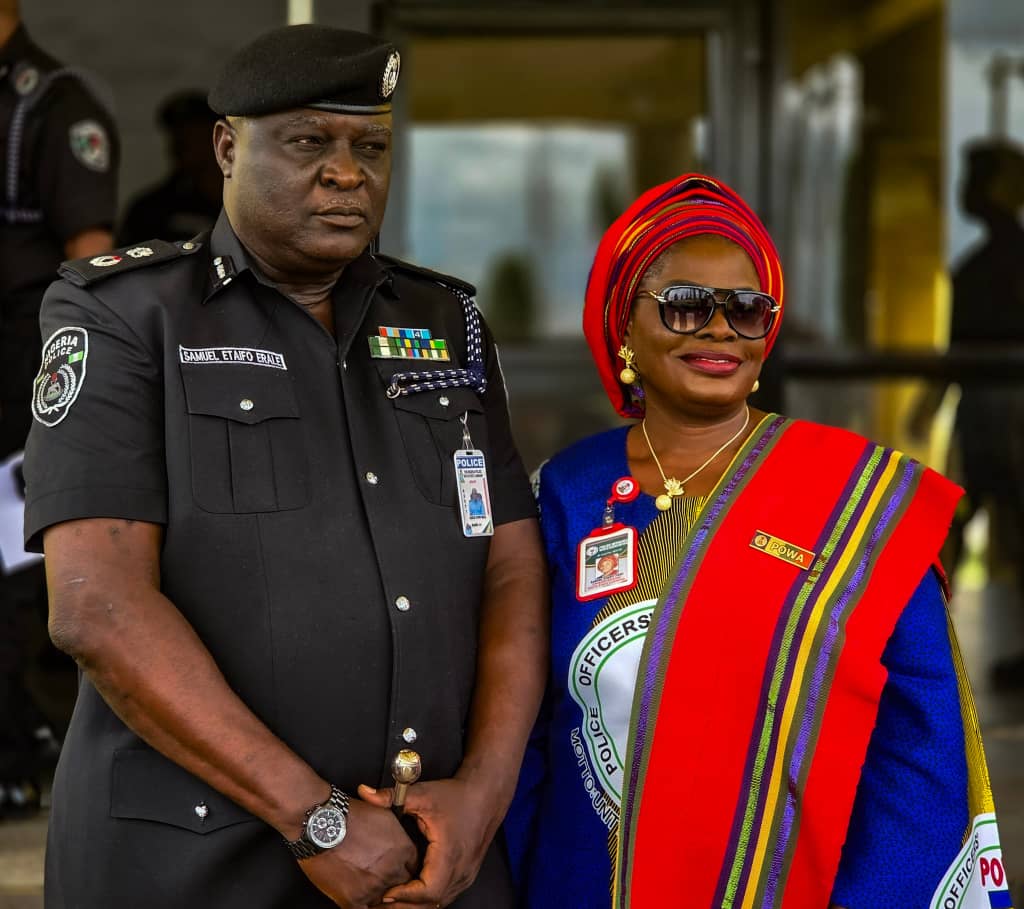
Senior police officers, including ACP Gloria Otonko, ACP, X-Squad, and other officers of the Command, attended the event.
But beyond the religious ceremony, the gathering provided the Commissioner with an opportunity to speak about something that affects every society: character.
For a police officer, integrity is particularly important because policing involves the exercise of public authority.
The confidence citizens place in the police depends not only on operational effectiveness, but also on the conduct of individual officers.
Ojajuni’s account therefore presents integrity not simply as a slogan, but as a personal responsibility.
His story suggests that the battle against corruption does not begin only in offices, police stations or government institutions.
It begins at home.
It begins with the lessons parents teach their children.
It begins with the examples children observe.
It begins with the values that are reinforced repeatedly until they become part of a person’s character.
A Worthy Compatriot
The story of CP Bode Ojajuni is, in many ways, a story of a man whose professional journey has been shaped by the values of his childhood.
From the father who insisted on knowing the legitimate source of borrowed money, to the police officer who says he has never demanded or collected a bribe, the thread running through his story is integrity.
From the young boy who grew up witnessing cooperation between Methodist and Catholic worshippers, to the Commissioner of Police serving a diverse population, his experiences have continued to influence his outlook on society.
Public office comes with authority, responsibility and privileges. But character determines how those privileges are exercised.
In a country where citizens increasingly demand accountability from those entrusted with public responsibilities, the story shared by the Ogun State Commissioner of Police offers a simple reminder:
Integrity is not acquired when a person assumes public office. It is cultivated long before the office comes.
It is taught at home.
It is reinforced by faith.
It is tested by circumstances.
And ultimately, it is demonstrated by the choices a person makes when nobody is watching.
That is why a worthy compatriot is not merely one who occupies a position of authority, but one who understands that public service is a trust and that the honour attached to an office must be matched by the character of the person who occupies it.
For CP Bode Ojajuni, the lesson from his late father remains alive.
And perhaps the greatest tribute a son can give to a father is not merely to remember his words, but to live by them.
— Asade Mustapha, Abeokuta