
By Ayo Oyoze Baje
QUOTE:
“Industrialization is perhaps the most effective anti-poverty programme ever invented, as manufacturing jobs typically exhibit productivity levels 3 – 5 times higher than traditional agriculture.”
-Aliko Dangote ( President/CEO, Dangote Group )
The lecture which was focused on showing the way forward for Africa’s industrialization was delivered
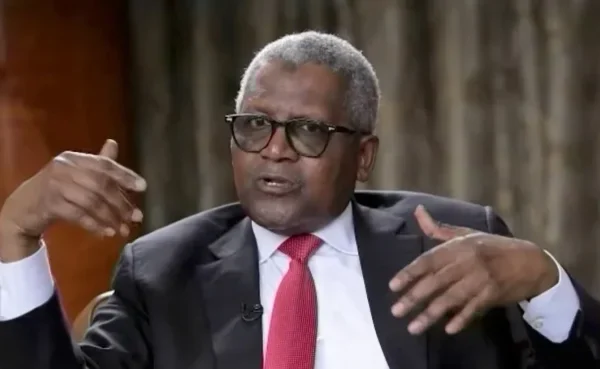
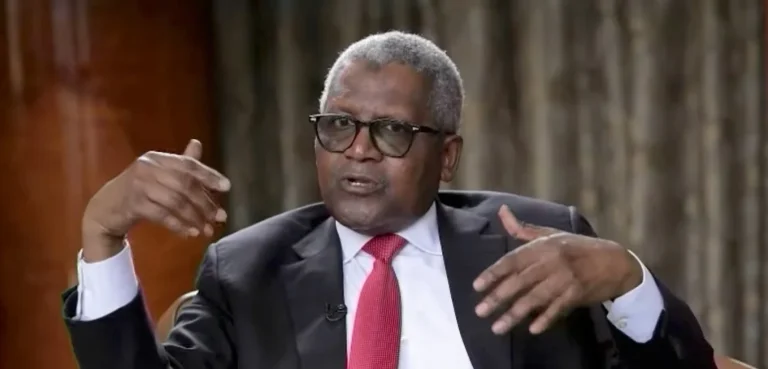
by the continent’s richest businessman and industrialist, Aliko Dangow at the
Africa Caucus 2026 Meeting in Banjul, The Gambia as reported on July 7,2026. It was hosted by President Adama Barrow and attended by top technocrats and policy makers from across the continent, Described as “wonderful ” by Mr. Ayo Omotoso, the publisher of the Travelogue Magazine, it was for more reasons than one. Indeed, It remains an insightful, and thought – provoking speech because it was backed with credible facts and figures.
It touched brilliantly on the fundamentals of what it takes for the continent to bridge the wide gap which currently exists between its vast natural resources and the products of such, through sustainable industrialization.
In his proposition, he highlighted the fact that:”No country in modern economic history has achieved high-income status without industrializing – not one. Every economy that has escaped poverty at scale—whether Britain, Germany, the United States, Japan, South Korea, China, Vietnam or more recently Bangladesh—did so through a deliberate process of industrial transformation.*
Stating it point blank, focused on the advantages industrialization provides as he noted that:” Industrialization has historically been the bridge between abundance of natural resources and abundance of prosperity”
Furthermore, industrialization
converts labour into productive employment, it transforms commodities into value-added products, it deepens domestic capital formation, it broadens the tax base, it fosters innovation, and ultimately, it creates the middle class that underpins social stability and political resilience.
With specific regards to the positives of industrialization
Aliko Dangote stated that: “Africa accounts for almost 18 percent of the world’s population, possesses approximately 30 percent of global mineral reserves, nearly 60 percent of uncultivated arable land, substantial hydrocarbon resources, and a youthful labour force projected to exceed 1 billion people by 2050.” But there are drawbacks What could they be?
Sadly , Africa remains the least industrialized region of the world despite possessing nearly every ingredient necessary for industrial success and more so, our contribution to global manufacturing value added, remains below 2 percent – manufacturing contributes barely 10–11 percent of Africa’s GDP, compared with over 25 percent in East Asia.
He expressed dismay that:”Our contribution to global manufacturing value added, remains below 2 percent – manufacturing contributes barely 10–11 percent of Africa’s GDP, compared with over 25 percent in East Asia.” ..
The continent’s share of global merchandise exports has stagnated around 3 percent, and more than 70 percent of our exports remain primary commodities and raw materials. The continent loses an estimated US$40–50 billion annually by exporting raw commodities that are processed elsewhere before being sold back to African consumers at significantly higher prices.


As he rightly stated: ” These statistics have been our signpost for decades. It explains why many African economies continue to experience cycles of growth without structural transformation. Growth derived solely from commodities can raise incomes temporarily but industrialization creates wealth permanently” That should serve as food-for-thought and more so, action
to our continent’s policy makers and those who implement them. Hence, the need to review our concept of industrialization
“It is therefore, my conviction that industrialization should not be viewed as one component of Africa’s development strategy. It should be recognized as the central organizing framework around which macroeconomic policies, trade arrangements, infrastructure investments, educational systems and financial markets are aligned.
” Industrialization matters more today, than ever before – the global economy is entering a period characterized by fragmentation, heightened geopolitical tensions and increasing competition for productive capacity. Global supply chains are being redesigned, countries are seeking resilience and regional diversification, and the energy transition is creating unprecedented demand for critical minerals.”
He also revealed that food security concerns are altering agricultural trade patterns, and digital technologies are reshaping manufacturing processes.
These developments are creating new risks for Africa, but also present, perhaps the greatest industrial opportunity the continent has seen in half a century.
On turning potentials into opportunities for increased productivity he aptly identified the fact that Africa’s population is projected to reach 2.5 billion people by 2050, representing one-quarter of humanity, by then, Africa will have the largest workforce in the world. If this labour force remains largely informal and underemployed, demographic expansion could become a source of instability, however, if absorbed into manufacturing, agro-processing, logistics, mining beneficiation and industrial services, it could become the most powerful engine of global growth.”. This is point blank, is it not? Of course, it is!
In fact, the experiences of East Asia remain instructive, between 1965 and 1990, manufacturing employment in the Republic of South Korea increased nearly fivefold. China’s industrial expansion lifted more than 800 million people out of poverty over four decades. Vietnam increased manufacturing exports from approximately US$5 billion in 2000 to more than US$370 billion today.
These transformations were not accidental- they resulted from deliberate industrial policies, export orientation, infrastructure investment and integration into larger regional and global markets.
Stating the brutal facts he explained: ” National industrialization strategies alone are insufficient, industrialization requires scale, scale requires markets, and markets require integration. No African country by itself, possesses sufficient market size to support efficient production across a broad range of industries. (To be continued )