
By Ayo Oyoze Baje
Quote:
“The future of Africa cannot be built on exporting crude oil and importing refined fuels, it cannot be built on exporting cocoa beans and importing chocolate, …
nor can it be built on exporting young people in search of opportunities elsewhere.”
Aliko Dangote ( President/CEO of Dangote Group )
Stating the brutal facts on national industrialization he explained that
strategies alone are insufficient, as industrialization requires scale, scale requires markets, and markets require integration. No African country by itself, possesses sufficient market size to support efficient production across a broad range of industries.
Highlighting the establishment of the African Continental Free Trade Area (AfCFTA as a game-changer in the continent ‘s economic productivity he stated that Africa requires both industrialization and integration, which must proceed According to him, it
epresents one of the most consequential economic initiatives undertaken since independence, “with a combined GDP exceeding US$3.5 trillion and a population of approximately 1.5 billion people, AfCFTA has the potential to become the world’s largest free trade area”
“Studies suggest that effective implementation could increase intra-African exports by more than 80 percent by 2035. The World Bank estimates AfCFTA could raise real incomes by approximately 7 percent, lifting nearly 50 million Africans out of extreme poverty”
On the need to make the right choices, he stated that the choice before us is therefore, not whether Africa industrializes, but whether Africa industrializes deliberately and collectively, or remains a supplier of raw materials in a rapidly changing world economy.
Industrialization is perhaps the most effective anti-poverty programme ever invented, as manufacturing jobs typically exhibit productivity levels 3 – 5 times higher than traditional agriculture.
“Studies suggest that every manufacturing job creates between 5 – 6 additional jobs in supporting sectors, including transportation, construction, finance, retail, and professional services.”
These experiences illustrate an important lesson, that industrialization requires patient capital, it requires long-term vision, it requires supportive public policies – including state protection against foreign dumping, substandard products, uncompetitive practice and above all, it requires confidence that Africa can produce, not merely consume, but even the excess it can export to the rest of the world .
Africa must therefore, mobilize its own savings, foreign investment is valuable, but domestic investment is indispensable.
History suggests that countries which successfully industrialized relied substantially on domestic capital accumulation, before attracting significant external investment .
In specific terms he mentioned the key policy priorities that are fundamental for Africa industrialisation – maintaining macroeconomic stability and policy consistency; investing aggressively in energy generation, transport corridors, and digital infrastructure; harmonizing customs procedures and reducing non-tariff barriers; reforming educational systems to align skills development with industrial requirements; and strengthening institutions responsible for industrial planning and implementation*
The future of Africa cannot be built on exporting crude oil and importing refined fuels, it cannot be built on exporting cocoa beans and importing chocolate, it cannot be built on exporting lithium and importing batteries, nor can it be built on exporting young people in search of opportunities elsewhere.”
Africa must increasingly consume what it produces, process what it extracts, and trade more extensively with itself. The African Continental Free Trade Area provides the market, our youthful population provides the labour, our natural resources provide the inputs, and our entrepreneurs provide the ambition.




What remains is collective resolve – if the nineteenth century belonged to Europe, and the twentieth century belonged largely, to North America and Asia, there is no reason why the twenty-first century cannot become the century in which Africa finally realizes its industrial destiny. Africa’s industrialization is not simply desirable, it is indispensable, and economic integration is not merely complementary, it is the accelerator that can transform Africa’s industrial aspirations into enduring prosperity for its people.
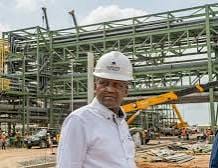
Narrowing it down to the Dangote Group as a way forward the focus was on his personal experience. He provided the life-changing impact the Dangote Group has made transforming from a trading company to that of an industrial conglomerate
This is how he beamed bright light on it “Africa is already producing examples that demonstrate what industrialization can achieve. *The Dangote Group itself offers one illustration – from a trading company established several decades ago, it has evolved into Africa’s largest industrial conglomerate. Its investments span cement, fertilizers, petrochemicals, sugar, salt, agriculture and energy.
” The refinery and petrochemical complex in Lekki represent one of the largest single industrial investments ever undertaken on the African continent. Its significance extends beyond refining crude oil, it demonstrates that African capital, African entrepreneurship and African engineering capabilities, can execute projects at globally competitive scale.*
“The refinery has the potential to save billions of dollars previously spent importing refined petroleum products- estimated 40 percent of total foreign exchange inflows, strengthen regional energy security and support downstream manufacturing activities – with a projected total 1.4 mbd production capacity by 2029.
In a similar vein, the fertilizer business contributes to agricultural productivity enhancement across several African markets – with an expansion projection of 12mtpa by 2030.
The cement business has substantially reduced dependence on imports, while stimulating construction and infrastructure development – with expansion capacity of 100mpta by 2030.”
These experiences illustrate an important lesson, that industrialization requires patient capital, it requires long-term vision, it requires supportive public policies – including state protection against foreign dumping, substandard products, uncompetitive practice and above all, it requires confidence that Africa can produce, not merely consume, but even the excess it can export to the rest of the world .
His final word on the continent’s industrialization matrix shows that
from all indications, hinged on the facts and figures presented through his insightful lecture as bolstered by his personal experiences, it is patently obvious that the pitiable paradox of mass misery, poverty and penury that Africans have been battling with for decades is all
due to lack of industrial productivity in the midst of plenty natural resources.
This remains a challenge for African leaders to do the needful not only through pro-people, productive economic policies but by acting on them with unity of purpose.( Concluded )